ABSTRACT
Initial teacher education requires strengthening future teachers’ knowledge and assessment practices through pedagogical innovations that incorporate university students’ participation in assessment training. This article seeks to analyze pre-service teachers’ evaluations of an assessment innovation, elucidating its effects on learning and the contextual factors that facilitate or hinder its implementation. The purpose of the assessment innovation was to enhance the participation of third-year students in General Basic Education in assessment processes through self-assessment, co-assessment, and peer-assessment activities. Responses from a focus group and three individual interviews were coded using qualitative content analysis. The results indicate a positive evaluation of the innovation due to its reflective-critical approach and the opportunities provided by self-assessment, coassessment, and peer-assessment spaces for collaborative learning and the re-signification of future assessment practices, given the presence of teacher guidance. However, academic demands, the impact on grades, and the need for socio-emotional support limit its effectiveness. The study concludes by highlighting the importance and challenges of consolidating assessment innovation processes in initial teacher education.
KEYWORDS: Initial teacher education; educational innovation; assessment; formative assessment; higher education
RESUMEN
La formación inicial docente requiere potenciar los conocimientos y prácticas evaluativas de futuros profesores mediante innovaciones pedagógicas que incorporen la participación de estudiantes universitarios en la formación evaluativa. El objetivo de este artículo es analizar las valoraciones que realizan los estudiantes de pedagogía sobre una innovación evaluativa para identificar sus efectos en el aprendizaje y los factores que la facilitan u obstaculizan. La innovación evaluativa tuvo como propósito fortalecer la participación de estudiantes de tercer año de Educación General Básica en los procesos evaluativos, mediante espacios de autoevaluación, coevaluación y evaluación de pares. Se codificaron las respuestas de un grupo focal y tres entrevistas individuales con un análisis cualitativo de contenido. Los resultados indican una valoración positiva de la innovación por su enfoque reflexivo-crítico y las posibilidades que brindan los espacios de autoevaluación, coevaluación y evaluación de pares para el aprendizaje colaborativo y la resignificación de las prácticas evaluativas futuras dado el acompañamiento docente. Sin embargo, la exigencia académica, el impacto sobre las calificaciones y la necesidad de soportes socioafectivos limitan su efecto. Se concluye sobre la importancia y desafíos para consolidar procesos de innovación evaluativa en la formación inicial docente.
PALABRAS CLAVE: Formación inicial docente; innovación pedagógica; evaluación formativa; evaluación; enseñanza superior.
1. Introduction
In initial teacher education, it is essential that students acquire a solid understanding of assessment knowledge and practices (Bilbao & Villa, 2018). This enables them to carry out assessments in line with the guidelines established in Assessment Decree 67/2018 (MINEDUC, 2018) and the Pedagogical Standards designed for the training of teachers in primary education in Chile (MINEDUC, 2022).
This framework requires a revision of the positivist assessment approach, traditionally focused on hetero-assessment (Andrade, 2019), to make way for an authentic assessment practice that encourages student participation. This will enable students to become conscious, reflective, critical, and self-critical subjects of their learning process (Ríos & Herrera, 2020; Stobart, 2010).
Black and Wiliam (2006) highlight the importance of formative assessment in the classroom, arguing that it not only improves student learning but also allows them to actively participate in their educational process. Similarly, Shepard (2000) emphasizes the need to transform assessment practices to make them more inclusive and studentcentered, which is essential for the development of critical and reflective skills.
Sadler (2010) and Orsmond et al. (2013) argue that, within the framework of formative assessment, feedback should be oriented toward interpretation, clarification, and negotiation of meaning between teachers and students. For their part, Nicol and Macfarlane-Dick (2006) investigated how self-assessment and co-assessment can empower students to improve their learning. Hattie and Timperley (2007) provided a comprehensive framework on feedback and its impact on learning, highlighting the importance of clarity and specificity in communicating assessment results.
In recent years, Wiliam (2011) has continued to explore formative assessment and its impact on learning, while Boud and Molloy (2012) have investigated sustainable feedback and its integration into teaching practice to improve longterm learning. Brookhart (2023) highlights the relevance of formative assessment based on authentic principles, promoting critical thinking and reflection in students. These ideas reinforce the contributions of Carless (2015), who suggests that effective feedback and self-assessment are key elements in achieving authentic and meaningful assessment.
Students' active participation in assessment processes is influenced by various factors that can facilitate or hinder their involvement in the teaching and learning process. The literature indicates that these factors include the pedagogical approach that guides students' reflective participation, the use of formative assessment to enhance ongoing learning, teacher feedback, and assessment strategies such as self-assessment, co-assessment, and peer-assessment, among others (Barrientos et al., 2020; Gabarda & Coloma, 2019; Ponce & Marcillo, 2020; Ríos & Herrera, 2023; Ríos & Troncoso, 2016).
In summary, initial teacher training must ensure that future teachers thoroughly understand assessment concepts and practices, enabling them to properly apply the ministerial guidelines of Assessment Decree 67 and the Pedagogical Standards. This framework suggests the need to move beyond a positivist assessment approach focused on hetero-assessment, promoting authentic assessment that involves students as active, reflective, and critical participants in their learning.
In addition, formative assessment should be highlighted as a key strategy for improving learning and promoting inclusive practices that respond to diversity in the classroom. Feedback in formative assessment should facilitate the understanding and negotiation of meanings between teachers and students, promoting the construction of critical thinking and the development of effective and sustainable assessment aimed at improving learning. The active participation of students in assessment depends on factors such as the pedagogical approach, the use of formative assessment, teacher feedback, and assessment strategies such as self-assessment and co-assessment, among others.
Considering this background, the objective of the assessment innovation was to analyze the assessments made by education students regarding the effects on their learning, facilitators, and obstacles observed in the context of their participation in an assessment innovation, through self-assessment, co-assessment, and peer-assessment.
2. Why move forward in transforming assessment practices in initial teacher training? Some background and research results
Assessment processes in university classrooms face challenges in the context of teaching geared toward comprehensive training. The conventional teacher-centered assessment model is not aligned with current student-centered pedagogy (Delgado, 2019). Therefore, it is imperative to incorporate assessment decentralization processes into these practices to ensure student participation through self-assessment, co-assessment, and peer- assessment procedures (Ríos & Herrera, 2020).
These modalities, in the context of authentic assessment, facilitate the development of complex skills and competencies, while strengthening co-responsibility in the learning process, promoting a positive academic trajectory for students (Fetterman et al., 2015). In addition, they contribute to a more transparent and democratic assessment practice (Ríos & Herrera, 2021).
Adachi et al. (2018) emphasize that the management of assessment procedures is one of the six key variables for carrying out authentic assessment in higher education. Considering this approach, it is important to implement innovations that seek to decentralize the assessment process, expanding student participation and collaboration in the assessment processes promoted by university teachers through self-assessment, co-assessment, and peer- assessment.
This could enable students to move from being objects to subjects of assessment, which, in turn, would allow for greater levels of self-regulation in their learning processes (Covarrubias et al., 2019). This effect can be observed in studies with university students, who benefit from these assessment practices that favor their monitoring and self-regulation abilities (Fraile et al., 2020), through assessment experiences related to self-assessment and coassessment (Basurto-Mendoza, et al., 2021). In this regard, Diaz-López (2018) points out in his study that their level is directly related to the motivational aspect of students and that this situation has an impact on the planning, supervision, and evaluation of their performance in their academic activities. According to Quezada and Salinas (2021), the self-regulation carried out by students is oriented toward decision-making.
Several studies have explored the implementation of these assessment practices in university settings. For example, Ríos and Troncoso (2016) found that self-assessment increases students' motivation and commitment to their own education in the context of learning to assess. Likewise, Longarela and Rodrígues-Padín (2023) highlight that peer-assessment fosters a collaborative learning environment, where students develop critical analysis, communication, and teamwork skills, a synergy that promotes deeper, more collaborative, and autonomous learning. However, Ribeiro-Silva and Amorim (2024) point out in a study that university students, by associating self-assessment with grades at the end of the educational process, show a lack of recognition of the role and value of self-assessment, which tends to exclude them from their own learning process. This situation is found in the study by Herrera and Ríos (2022), where incorporating self-grading into self-assessment processes becomes an obstacle that prevents critical and representative self-reflection on performance. In effect, grading has a negative impact on self-assessment, as it forces students to focus on certification of learning with a focus on passing or failing.
Furthermore, authentic assessment, which includes these decentralized modalities (Ríos and Herrera, 2020), has been shown to benefit students by encouraging and deepening their participation while helping them advance in the development of their skills and knowledge of the subject matter (Brown, 2015). These competencies are essential for the comprehensive training of students and their preparation for the world of work.
Wanner and Palmer (2018) have investigated how self-assessment and peer-assessment can contribute to developing key skills in students, such as taking greater responsibility for their own learning, generating a better understanding of the disciplinary content taught, producing assessment criteria and their own values and judgments, and improving critical thinking skills. Meanwhile, Zhu and Carless (2018) describe how peer-assessment promotes students' ability to engage in dialogue with each other and with the teacher, encourages participation and discussion in the different curricular activities carried out in the teaching and learning process, and contributes to the understanding of the subjects taught. In the particular case of self-assessment, it promotes self-reflection, as it allows students to generate the different cognitive processes that come into play in the learning process, in addition to increasing their acceptance of feedback for future action as learners.
In conclusion, the incorporation of self-assessment, co-assessment, and peer-assessment processes in university classrooms not only responds to the demands of student-centered pedagogy, but also contributes to the development of complex skills and shared responsibility in learning. Recent literature supports the effectiveness of these practices, underscoring the need to continue innovating in assessment methods to improve educational quality and the comprehensive training of students.
3. Methodology of the evaluative innovation experience
3.1 Problem and innovation objective
The problem of assessment innovation originated in the diagnosis of the General Primary Education degree program at a state university, in the context of the accreditation process linked to the certification of the educational quality of future teachers (CNA, 2018). Given this framework, and in view of the challenge identified regarding student participation in the assessment of their disciplinary, pedagogical, and professional learning, the problem selected was the limited active participation of students in the assessment processes implemented in the training processes of future teachers of General Primary Education. Therefore, the objective of the evaluative innovation was to strengthen student participation in the evaluation processes developed throughout their training, within the framework of Initial Teacher Training.
3.2 Design of the evaluative innovation
The design of the innovation included three sequential stages based on specific and coordinated milestones, from planning to evaluation and reflection on the results. Table 1 presents the design of the innovation.
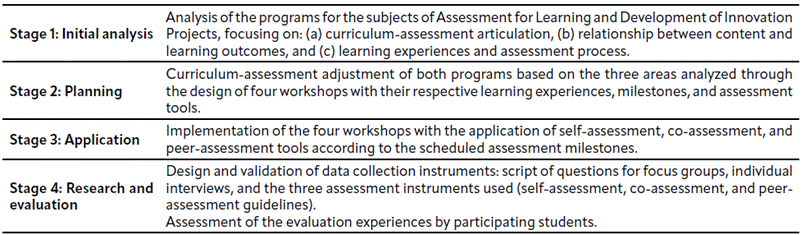
In addition, the assessment innovation was implemented in both face-to-face and synchronous remote modes, given the university's policies of progressive return in the context of the post-COVID-19 pandemic.
3.3 Participants
Twenty third- and fourth-year students enrolled in the General Primary Education Pedagogy program at a state university in Santiago, Chile, participated. Of the participants, 16 were women and 4 were men. These were distributed among 13 third-year students enrolled in the Assessment for Learning course and 7 fourth-year students enrolled in the Innovation Projects course. Both figures represent the total enrollment for the two courses. Their ages ranged from 20 to 21 years old. The courses were taught by the same teacher who was involved in the design, implementation, and evaluation of the assessment innovation.
3.4 Data collection instruments
In Stage 3 of the evaluative innovation-workshop implementation-data collection was focused on the design and application of three types of assessment instruments to encourage student participation in the assessment processes. Details of each of these instruments are presented in Table 2.
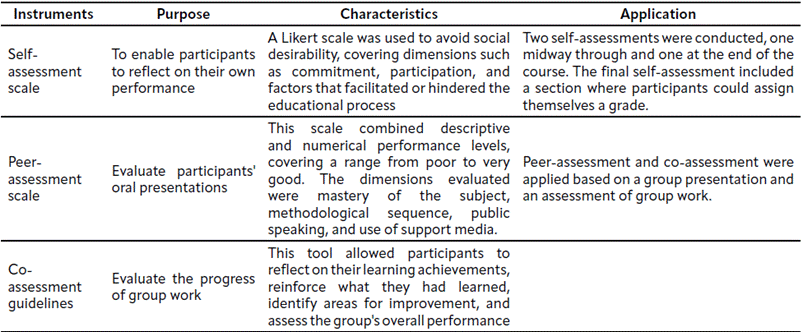
To ensure the validity of the instruments, they underwent a validation process carried out by three experts in education and evaluation, who analyzed each one according to the criteria of relevance (logical integration of the aspects evaluated) and consistency (logical articulation with the corresponding evaluative dimension). The validation results indicated a high level of compliance (maximum score in the validation by judge) in the dimensions and indicators of each instrument, using a mixed scale from 0 to 3, where 0 indicated that the criterion was not met and 3 reflected a high level of compliance.
Considering this instrumental context, we proceeded to investigate the assessments of the students participating in the evaluative innovation experience through a focus group and individual interviews. In this way, their assessments were collected within the framework of the implementation and use of these three evaluative instruments to account for their participation in the evaluative processes. Thus, both the focus group and the individual interviews focused on understanding the students' assessments in this context of post-application of the assessment instruments. The questions for both techniques were validated through the three expert judgments using the same validation criteria used for the assessment instruments. The semi-structured questions obtained the maximum validation score. The details are presented in Table 3.

3.5 Data analysis and interpretation
The information gathered in the focus group and individual interviews was coded using qualitative content analysis (Schreier, 2012) in a deductive manner based on interpretive categorical construction using NVivo version 12 software. The data analysis protocol was as follows: (a) textual transcription, (b) coding of the information according to the dimensions of the questions asked in the focus group and interviews, which were organized into text fragments, (c) interpretation of the text fragments according to the dimensions that make up the question matrix, (d) selection of textual units representative of the subjects' narratives, and (e) categorical synthesis based on the textual units.
4. Results
The main results related to the assessments of the effects and determining factors that education students highlight about the evaluative innovation in which they participated are presented below.
4.1 Assessments of evaluative innovation
The main assessments of the effects of evaluative innovation according to dimensions are presented in Table 4.
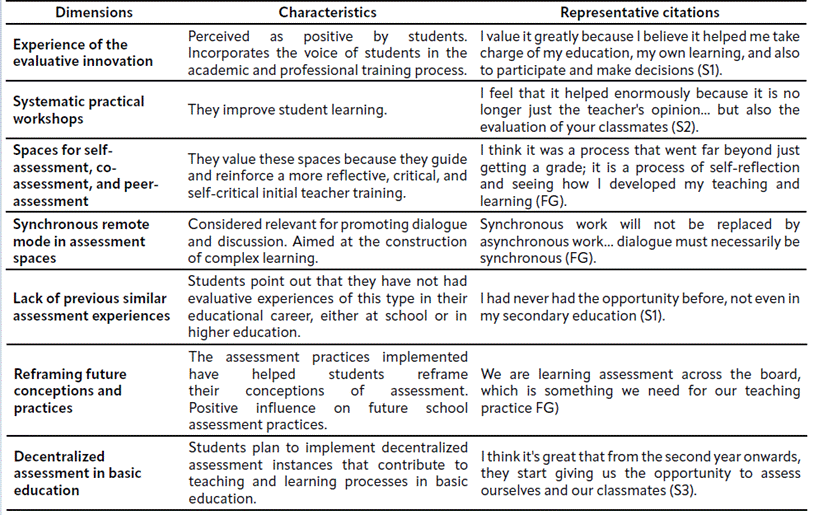
Analysis of the assessments reveals that students perceive assessment innovation as a highly positive experience due to its inclusive and reflective approach. The essence lies in how incorporating their voice into the training process, through tools such as self-assessment, co-assessment, and peer-assessment, strengthens their academic and professional development.
In addition, the synchronous remote modality in assessment spaces has been valued for its ability to foster dialogue and discussion aimed at constructing complex learning, something they had not previously experienced in their educational trajectory. This lack of similar experiences in the past highlights the innovative nature of the practices implemented, which not only improved their learning but also influenced the reframing of their conceptions of assessment and the planning of future decentralized practices in primary school education.
Students value their participation in assessment innovation positively and significantly, as it encourages a more critical and self-critical perspective, preparing future teachers to apply more inclusive and effective assessment practices in their professional work.
Therefore, it is argued that participants show a positive assessment of evaluative innovation, highlighting three key elements: reframing conceptions of evaluation, including student voices, and developing critical thinking and reflection, given that it is viewed as a transformative learning experience. Furthermore, it is noted that this innovation represents a turning point in the students' formative experience, as there is no history of coparticipation and co-responsibility in similar evaluation processes in their educational trajectory, which reinforces the transformative nature of the innovation implemented.
4.2 Assessment agents and student participation
Considering the importance of student participation in evaluation processes through self-assessment, coassessment, and peer assessment, the following table shows the assessments made by students when they take on the role of evaluation agents in these different processes, which allows them to practice the assessment exercise. This situation is detailed in Table 5.
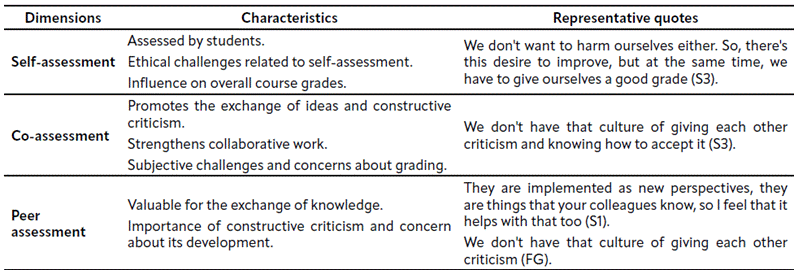
 Participants in the evaluative innovation valued self-assessment, co-assessment, and peer-assessment, highlighting their importance in initial teacher training. However, self-assessment is valued by students, although it presents ethical challenges, especially in relation to self-grading and its influence on overall course grades. This indicates that, while self-assessment is a powerful tool for reflection and self-knowledge, its implementation requires careful management to avoid bias and ensure fairness.
Co-assessment is perceived as a practice that strengthens collaborative work by promoting the exchange of ideas and constructive criticism. However, it also faces challenges, such as subjectivity and concerns about fairness in grading, suggesting the need to establish clear and agreed-upon criteria for its application.
Peer-assessment is valued for its ability to facilitate knowledge sharing and constructive criticism. However, there is concern about students' ability to receive and handle criticism constructively, which could affect the effectiveness of this methodology.
Assessment innovation has been successful in several key areas, improving learning and encouraging critical and collaborative reflection. However, its implementation must consider the ethical and subjective challenges that arise, especially in self-assessment and co-assessment, in order to maximize its potential for building learning and equity in the educational process. Together, these practices of evaluative decentralization or greater student co-responsibility in evaluative processes promote a more participatory and formative evaluative culture, although they require ethical, normative, and affective scaffolding to ensure their effectiveness without compromising trust or the formative climate.
4.3 Conditions for evaluative innovation
Education students describe a series of constraints on the assessment innovation in which they participated, both in terms of facilitators and obstacles, which are presented in Table 6.
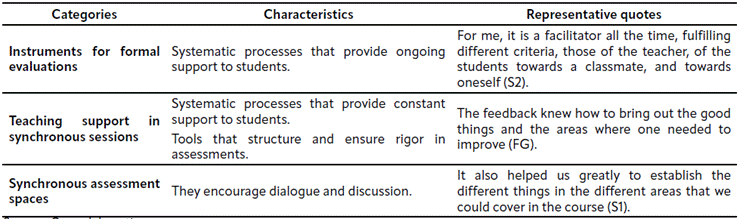
Among the main facilitators of assessment innovation, the importance of teacher support in synchronous sessions stands out. This continuous and systematic support is crucial for guiding students through the assessment process, ensuring that they understand and make the most of learning opportunities. In addition, the use of formal assessment tools provides a clear and rigorous structure, which improves transparency and fairness in assessments. Finally, synchronous assessment spaces are valued for their ability to promote dialogue and discussion, which are essential elements for critical and reflective learning. These spaces allow students to interact constructively, sharing ideas and receiving feedback in real time, which enriches their learning experience.
The obstacles reported following the assessment innovation are presented in Table 7.
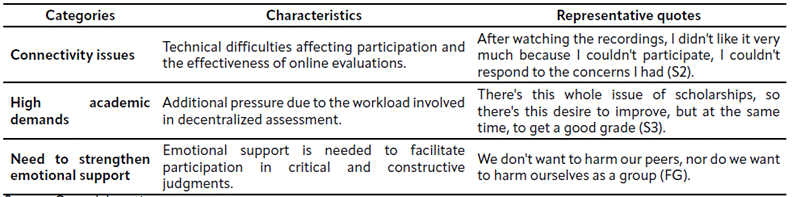
The main obstacles reveal some challenges that negatively affect the implementation of evaluative innovation. Connectivity issues are a significant technical obstacle, especially in a synchronous assessment environment where real-time interaction is essential. These difficulties can limit student participation and compromise the effectiveness of assessments. The high academic demands associated with decentralized assessment place considerable pressure on students, which can lead to burnout and affect their performance.
The need to strengthen affective supports underscores the importance of providing adequate emotional support, especially in a context where students are expected to engage in critical and constructive judgments. Without this support, students may feel overwhelmed, which could reduce their ability to participate effectively in complex assessment processes. While the identified facilitators create an environment conducive to assessment innovation, ensuring deeper and more reflective learning, technical obstacles, academic load, and lack of emotional support represent significant challenges that must be addressed. To maximize the effectiveness of assessment innovation, it is essential to balance these factors, ensuring that students not only have access to resources and academic support, but also to an environment that supports their emotional well-being and their ability to engage critically and constructively in the assessment process.
5. Discussion
The main findings related to students' assessment of educational innovation concern its contributions, ethical challenges, the role of teachers, and implications for comprehensive education, among others.
The transformation of assessment practices in higher education, based on self-assessment, co-assessment, and peer-assessment processes, is aligned with the growing need to move toward a pedagogical model centered on the student, where the student is an active agent in their learning (Delgado, 2019). These innovative practices, integrated within the framework of authentic assessment, not only promote comprehensive education but also address the current demands for developing critical skills for the world of work (Ríos Muñoz & Herrera Araya, 2020; Wanner & Palmer, 2018).
The results highlight that these methodologies are positively valued by students, who appreciate the inclusive, reflective, and collaborative nature of these practices. In particular, synchronous assessment sessions have promoted in-depth dialogues and the reframing of assessment as a tool for meaningful learning and not just as a certification mechanism, in line with Zhu and Carless (2018) and Longarela and Rodrígues-Padín (2023). These experiences enrich academic and professional development, preparing future teachers to implement more effective and inclusive assessment approaches in their professional work.
However, implementing these methods is not without its challenges. Self-assessment has been valued by students as a privileged space for self-reflection and the development of metacognitive awareness, which are key elements in the training of professionals capable of monitoring and adjusting their own learning processes (Panadero, 2017). However, when this practice is directly linked to grading, ethical tensions arise that complicate its implementation. As Ríos Muñoz and Herrera Araya (2023) and Ribeiro-Silva and Amorim (2024) point out, self-grading can generate cognitive biases, such as overestimating or underestimating one's own performance, which compromises the transparency and fairness of the assessment process. This underscores the need to dissociate self-assessment from grading and focus it on developing critical self-regulation and personal monitoring skills (Fraile et al., 2020).
From this perspective, self-assessment not only promotes student autonomy and agency, but also allows for the development of monitoring and critical judgment skills, which are essential in teacher training. In addition, the sustained practice of self-assessment contributes to the construction of a reflective professional ethic (Díaz-López, 2018; Ríos Muñoz & Herrera Araya, 2020), as it invites future teachers to recognize their strengths, weaknesses, and training needs. This exercise in self-reflection and ethical analysis is consistent with the current demands for training professionals capable of evaluating with fair, inclusive, and relevant criteria.
Co-assessment, although perceived as a tool for strengthening collaborative work and constructive criticism, faces problems of subjectivity and fairness, especially in contexts where there are no clear and agreed-upon criteria. This raises the need to establish well-defined instruments and rubrics to guide the process, as highlighted by Fetterman et al. (2015) and Brookhart (2023).
In this sense, co-assessment should not only be understood as a technique, but as a dialogical and formative process, which is part of a logic of co-responsibility for learning. This dimension is fundamental in the context of initial teacher training, as it allows for the promotion of collaborative assessment practices that can be implemented by future professionals in their school contexts, thus responding both to the training processes and to the requirements of current school assessment policy.
Peer -assessment stands out as a practice highly valued by students for its potential to promote horizontal knowledge exchange and constructive criticism. This practice allows students to recognize themselves as competent subjects capable of making informed judgments, while developing skills in argumentation, active listening, and feedback assessment (Adachi et al., 2018).However, the process is not without its difficulties. One of the main challenges reported by students is receptivity to criticism, that is, the ability to receive feedback without perceiving it as a personal threat. This affective dimension can negatively affect the effectiveness of the process, especially if students have not developed critical resilience skills. In this regard, Zhu and Carless (2018) emphasize that for peer feedback to be effective, it is necessary to create a climate of trust and offer teacher support that facilitates the interpretation and use of critical comments to promote active and co-responsible agency in improving the task.
The role of the teacher is fundamental in the implementation of these practices. The results underscore the importance of continuous and systematic support in synchronous sessions, where reflective dialogue and constructive feedback are encouraged (Wiliam, 2020). This support not only ensures that students understand the objectives of the assessment process, but also helps mitigate the emotional and ethical challenges that may arise. In addition, the use of formal assessment tools contributes to increasing the clarity and fairness of the process (Adachi et al., 2018).
Assessment innovation not only benefits academic learning, but also strengthens essential professional skills such as critical thinking, self-regulation, ethical reflection, and collaborative work. This coincides with the findings of Brookhart (2023) and Wanner and Palmer (2018), who highlight that these practices not only improve content comprehension, but also promote the development of autonomous values and criteria in students.
The synchronous nature of these practices not only improves real-time interaction but also addresses technical obstacles, such as connectivity issues, that affect the participation of some students. This highlights the need to combine these practices with complementary asynchronous strategies that mitigate these limitations, promoting effective inclusion for all participants.
In summary, self-assessment, co-assessment, and peer-assessment practices, integrated within the framework of authentic assessment, represent an invaluable opportunity to transform assessment processes in higher education. These practices not only respond to the demands of a student-centered pedagogical approach, but also foster shared responsibility in learning and develop critical skills. However, their implementation requires careful management that considers the ethical, technical, and emotional challenges identified, thus ensuring their effectiveness and fairness.
This evaluative innovation proposes a paradigm shift in university teaching, where students not only participate in the evaluation process but also become active subjects of their learning, assuming a critical and reflective role that enhances their comprehensive and professional training (Brookhart, 2023; Ríos Muñoz & Herrera Araya, 2020; Zhu & Carless, 2018).
5.1 Limitations of innovation
The limitations identified in the evaluative innovation are related to the fact that, as it was carried out online, some students experienced intermittent connectivity issues, which may have affected their understanding and participation in the activities included in the positive transformation applied to the subjects involved. Another aspect that could potentially limit the experience is that the teacher of the two subjects was primarily responsible for implementing the innovation, which could potentially influence student participation and commitment when grading the evaluative activities included in both subjects. This situation was mitigated by the participation of a teacher who was actively involved in the different stages of the innovation and in the collection of data to obtain the assessment of the participating students.
6. Conclusions
Assessment innovation based on self-assessment, co-assessment, and peer-assessment processes is a significant step toward student-centered higher education, in line with the principles of authentic assessment. These practices not only transform assessment into a meaningful learning tool, but also foster the development of essential skills for students' comprehensive and professional training, such as critical thinking, self-regulation, collaboration, and ethical reflection.
The findings reflect a positive assessment by students, especially in synchronous contexts where reflective and collaborative dialogue is promoted. However, ethical and technical challenges that require attention are identified, such as the tension between self-assessment and self-grading, subjectivity in co-assessment, and the need to develop skills to address critical processes in peer-assessment. In addition, technical limitations, such as connectivity issues, underscore the importance of designing complementary strategies that ensure equity and inclusion.
The role of the teacher is crucial in this process, not only as a mediator but also as a guide in implementing clear criteria and creating a safe environment that encourages active and reflective student participation. This ensures that innovative practices are not only effective, but also ethically responsible and technically feasible.
The incorporation of these methodologies represents an opportunity to reconfigure assessment paradigms in higher education, empowering students as active agents of their own learning. To maximize their impact, it is essential to address the challenges identified, ensuring a balance between innovation, equity, and quality in evaluation processes.
This approach not only transforms educational experiences but also prepares students to respond to the demands of a dynamic and collaborative professional world.
Declaraciones
Contribution of authors Daniel Ríos Muñoz: Conceptualization - Data curation - Formal analysis - Writing of the original draft - Research David Herrera Araya: Conceptualization - Formal analysis - Software - Methodology - Writing, review, and editing
Conflicts of interest The authors declare that they have no conflicts of interest in relation to the preparation or publication of this article.
Acknowledgments
We thank the participating students for their willingness and commitment during the research.
References
- Adachi, C., Tai, J. y Dawson, P. (2018). A framework for designing, implementing, communicating and researching peer assessment. Higher Education Research & Development, 37(3), 453-467. https://doi.org/10.1080/07294360.2017.1405913.
- Andrade, H. (2019). A Critical Review of Research on Student Self-Assessment. Frontiers in Education, 4, 87. https://doi.org/10.3389/feduc.2019.00087.
- Barrientos-Hernán, E. J., López-Pastor, V. M. y Pérez-Brunicardi, D. (2020). Evaluación Auténtica y Evaluación Orientada al Aprendizaje en Educación Superior. Una Revisión en Bases de Datos Internacionales. Revista Iberoamericana De Evaluación Educativa, 13(2), 67-83. https://doi.org/10.15366/riee2020.13.2.004.
- Basurto-Mendoza, S., Moreira-Cedeño, J., Velásquez-Espinales, A. y Rodríguez-Gámez, M. (2021). Autoevaluación, coevaluación y heteroevaluación como enfoque innovador en la práctica pedagógica y su efecto en el proceso de enseñanza-aprendizaje. Polo de Conocimiento, 56 (6), 828-845. https://polodelconocimiento.com/ojs/index.php/es/article/view/2408.
- Bilbao Martínez, A. y Villa Sánchez, A. (2018). La competencia evaluativa como factor clave en la calidad docente: Percepción de las/os maestras/os en la formación inicial. Profesorado, 22(4),171-195. https://doi.org/10.30827/profesorado.v22i4.8412.
- Black, P. y Wiliam, D. (2006). Assessment and classroom learning. Assessment in Education: Principles, Policy & Practice, 5(1), 7-74. https://doi.org/10.1080/0969595980050102.
- Boud, D. y Molloy, E. (2012). Feedback in Higher and Professional Education: Understanding it and Doing it Well. Routledge.
- Brown, S. (2015). La evaluación auténtica: el uso de la evaluación para ayudar a los estudiantes a aprender. RELIEVE, 21(2). https://doi.org/10.7203/relieve.21.2.7674.
- Brookhart, S. M. (2023). Classroom Assessment Essentials. ASCD.
- Carless, D. (2015). Excellence in University Assessment: Learning from Award-winning Practice. Routledge.
- Comisión Nacional de Acreditación (CNA) (2018). Carreras de pedagogía: análisis de fortalezas y debilidades en el escenario actual. Serie Estudios sobre Acreditación. CNA.
- Covarrubias Apablaza, C. G., Acosta Antognoni, H. y Mendoza Lira, M. (2019). Relación de autorregulación del aprendizaje y autoeficacia general con las metas académicas de estudiantes universitarios. Formación Universitaria, 12(6), 103-114. https://dx.doi.org/10.4067/S0718-50062019000600103.
- Delgado Martínez, L. M. (2019). Aprendizaje centrado en el estudiante, hacia un nuevo arquetipo docente. Revista Interuniversitaria de Didáctica,37(1), 139-154. https://doi.org/10.14201/et2019371139154.
- Díaz López, M. M. (2018). Impacto de la retroalimentación y la evaluación formativa en la enseñanza-aprendizaje de Biociencias. Educación Médica Superior, 32(3), 147-156. https://ems.sld.cu/index.php/ems/article/view/1492.
- Fetterman, D., Kaftarian, S. y Wandersman, A. (2015). Empowerment Evaluation: Knowledge and Tools for SelfAssessment, Evaluation Capacity Building, and Accountability. Sage.
- Fraile Ruiz, J., Gil Izquierdo, M., Zamorano Sande, D. y Sánchez Iglesias, I. (2020). Autorregulación del aprendizaje y procesos de evaluación formativa en los trabajos en grupo. RELIEVE, 26(1), art. M5. http://doi.org/10.7203/relieve.26.1.17402.
- Gabarda Méndez, V. y Colomo Magaña, E. (2019). La autoevaluación como herramienta de evaluación: percepciones del proceso de aprendizaje de los estudiantes en prácticas del Grado en Educación Primaria. Revista Prácticum, 4(1), 37-54. https://doi.org/10.24310/RevPracticumrep.v4i1.9874.
- Hattie, J. y Timperley, H. (2007). The power of feedback, Review of Educational Research, 77, (1), 81-112. https://doi.org/10.3102/003465430298487.
- Ministerio de Educación-Chile (MINEDUC). (2018). Decreto 67: Aprueba normas mínimas nacionales sobre evaluación, calificación y promoción y deroga los decretos exentos n° 511 de 1997, n° 112 de 1999 y n° 83 de 2001. https://www.bcn.cl/leychile/navegar?idNorma=1127255.
- Ministerio de Educación-Chile (MINEDUC). (2022). Estándares Pedagógicos y Disciplinarios para Carreras de Pedagogía en Educación General Básica. https://estandaresdocentes.mineduc.cl/educacion-general-basica/.
- Nicol, D. J. y Macfarlane-Dick, D. (2006). Formative assessment and self-regulated learning: A model and seven principles of good feedback practice. Studies in Higher Education, 31(2), 199-218. https://doi.org/10.1080/03075070600572090.
- Longarela-Ares, Ángeles M. y Rodríguez-Padín, R. (2023). Aprendizaje colaborativo, learning-by-doing y evaluación entre pares en educación superior. Revista Internacional para la Calidad Educativa, 3(2), 275-298. https://doiorg/10.55040/educa.v3i2.66.
- Orsmond, P., Maw, S., Park, J., Gomez, S. y Crook, A. (2013). Moving feedback forward: theory to practice, Assessment & Evaluation in Higher Education, 38(2), 240-252. https://doi.org/10.1080/02602938.2011.625472.
- Panadero, E. (2017). A review of self-regulated learning: Six models and four directions for research. Frontiers in Psychology, 8, 422. https://doi.org/10.3389/fpsyg.2017.00422.
- Ponce-Aguilar, E. E. y Marcillo-García, C. E. (2020). Auto-evaluación y coevaluación: una experiencia en el proceso de enseñanza-aprendizaje. Dominio De Las Ciencias, 6(2), 246-260. https://doi.org/10.23857/dc.v6i3.1216.
- Quezada Cáceres, S. y Salinas Tapia, C. (2021). Modelo de retroalimentación para el aprendizaje: Una propuesta basada en la revisión de literatura. Revista Mexicana de Investigación Educativa, 26(88), 225-251. https://ojs.rmie.mx/index.php/rmie/article/view/219.
- Ribeiro-Silva, E. y Amorim, C. (2024). Autoavaliação: conceitos, instrumentos e práticas dos estudantes estagiários em educação física. Teaching, 3, 35-43. https://estudogeral.uc.pt/bitstream/10316/108611/1/TEACHING%202.pdf.
- Ríos Muñoz, D. y Herrera Araya, D. (2023) Retroalimentación docente y autoevaluación de los estudiantes en educación superior: innovación evaluativa en la formación inicial de profesores de educación primaria. Revista Brasileira de Educação, 28, e280123. https://doi.org/10.1590/S1413-24782023280123.
- Ríos Muñoz, D. y Herrera Araya, D. (2021). Contribution of the educational evaluation for the democratic and transformative formation of the student. Revista Electrónica Educare, 25(3), 1-15. https://doi.org/10.15359/ree.25-3.40.
- Ríos Muñoz, D. y Herrera Araya, D. (2020). Decentralizing the assessment practice for student self-learning. Educação e Pesquisa, 46,1-15. https://doi.org/10.1590/S1678-4634202046219544.
- Ríos Muñoz, D. y Troncoso, P. (2016). Autoevaluación de los alumnos: una estrategia participativa orientada al "aprender a valorar". REXE, 2(4), 111-120. https://www.rexe.cl/index.php/rexe/article/view/254.
- Sadler, R. (2010) Beyond feedback: Developing student capability in complex appraisal”. Assessment & Evaluation in Higher Education, 35(5), 535-550. https://doi.org/10.1080/02602930903541015.
- Shepard, L. A. (2000). The role of assessment in a learning culture. Educational Researcher, 29(7), 4-14. https://doi.org/10.3102/0013189X029007004.
- Stobart, G. (2010). Tiempos de pruebas: los usos y abusos de la evaluación. Morata.
- Wiliam, D. (2011). Embedded Formative Assessment. Solution Tree Press.
- Wanner, T. y Palmer, E. (2018) Formative self-and peer assessment for improved student learning: the crucial factors of design, teacher participation and feedback. Assessment & Evaluation in Higher Education, 43(7), 1032-1047. https://doi.org/10.1080/02602938.2018.1427698.
- Zhu, Q. y Carless, D. (2018). Dialogue within peer feedback processes: clarification and negotiation of meaning. Higher Education Research & Development, 37(4), 883-897. https://doi.org/10.1080/07294360.2018.1446417.
Notes
- Ethical implications There are no ethical implications to declare in the preparation or publication of this article.