ABSTRACT
Technoscientific advancement and the growing relevance of Artificial Intelligence (AI) in higher education have led to an urgent need for coherent and effective regulations, considering the differentiated levels of social, cultural, and economic development. This study aims to compare the regulatory frameworks regarding the integration of AI in higher education across Argentina, Brazil, Chile, Peru, and Spain, with the goal of identifying the gaps that need to be addressed in order to incorporate AI into educational practices in an ethical and responsible manner. A multimodal approach is adopted, combining comparative education methodology and content analysis to examine the interrelations and variations that distinguish these contexts from one another. The findings reveal that, while there are shared needs for the inclusion of ethical guidelines, there are also marked differences in the type, scope, and implementation of these regulations among the countries. Spain, as part of the European Union, demonstrates notable advances in contrast with the South American nations.
KEYWORDS: Artificial Intelligence; Higher Education; Regulatory Frameworks; Comparative Education
RESUMEN
El avance tecnocientífico y la creciente relevancia de la Inteligencia Artificial (IA) en la educación superior han llevado a una necesidad imperiosa de regulaciones coherentes y efectivas sobre este proceso en ámbitos diferenciados respecto de sus niveles de desarrollo social, cultural y económico. Este estudio tiene como objetivo: comparar los marcos regulatorios sobre la incorporación de la IA en la educación superior de Argentina, Brasil, Chile, Perú y España; buscando identificar las brechas que deben ser cubiertas para incorporar la IA en las prácticas educativas de manera ética y responsable. Se adopta un enfoque multimodal que combina una metodología de educación comparada y un análisis de contenido para examinar las interrelaciones y variaciones que diferencian a estos contextos entre sí. Los hallazgos revelan que, si bien hay necesidades comunes en la inclusión de directrices éticas, también hay marcadas diferencias en el tipo, alcance y concreción de estas regulaciones entre los países, con destacados avances de España como parte de la Unión Europea en contraste con los países de América del Sur.
PALABRAS CLAVE: Inteligencia Artificial; Educación Superior; Marcos Regulatorios; Educación Comparada
1. Introduction
Current technoscientific advance demands that formative programs remain one step ahead of sudden and constant changes, with Artificial Intelligence (AI) emerging as a transformative force in diverse educational processes and stages (UNESCO, 2019; 2024a). In this context, it is crucial to consider the International Standard Classification of Education (ISCED; UNESCO, 2012), that deals with eight levels of formation of the human being, and positions higher education from the sixth level, including undergraduate, masters, and doctoral studies. This classification provides a global educational policy framework that guides educational systems from different latitudes to take on integral formation from common arrangements and patterns in spite of the singularities and variations in their indicators of cultural, social, and economic development.
In this sense, the incorporation of AI is indispensable to respond to the demands the levels the ISCED (UNESCO, 2012) establishes, as we cannot ignore its presence and impact in the academic space. For this reason, it is fundamental to adapt educational programs with the intention of forming professional and agents of social change who are able to reimagine the future in an undetermined globalized world (UNESCO, 2022b). In this proposal, AI must be seen as a valuable tool, and not as a threat (UNESCO, 2021b), as, if it is adequately integrated through clear and viable regulations, it will foster academic formation, contemplating the trajectory of professional formation, and will avoid potential emerging risks.
In this respect, organizations such as the UN and the OECD have conformed working groups and consulting councils, in addition to establishing principles, norms, and declarations about AI. The OECD, in particular, has insisted on harmonizing norms between different jurisdictions (OECD, 2019a; 2021). It is anticipated that, in the next few years, diverse countries will implement more regulations about artificial intelligence (Centro Nacional de Planeamiento Estratégico [CEPLAN], 2024). However, failings in the supervision and regulation of these implementations could limit the benefit of this technology and have a negative impact on society’s trust in its use (Llamas et al., 2022).
The global framework of sustainable development offers a decisive opportunity for social and economic advance for all countries, grounded in ethical principles that guide the responsible integration of AI (OECD, 2019b). Ethical guidelines are essential in creating regulatory frameworks that ensure a use of AI that respects human rights and promotes common wellbeing aligned with the SDG - Sustainable Development Goals (UNESCO, 2015). From this perspective, neither individual interests nor competitiveness that exclude others in a joint development process should take precedence, but rather the appropriate action is to channel international collaboration and flexible governance to achieve pertinent management of the risks and opportunities of AI (Millennium Project, 2023).
In light of this, it is worth highlighting that the European Union has established a regulatory system for the incorporation of AI into academia, offering clear and convincing guidelines and mechanisms at the level of educational policy for the group of countries that make it up (European Commission, 2021a; 2021b). This coherence is congruent with the ideal of unity and common good aspired to by countries with different geographical contexts and constitutes an opportunity to foster awareness in areas that still need to stamp a sense of urgency with respect to effective guidelines and the configuration of concrete mechanisms to guarantee an ethical and beneficial integration of AI into higher education (European Commission, 2022).
More specifically, Spain, part of this study, allows us to gain access to the regulatory framework established by the European Union (European Commission, 2021c), such as the Artificial Intelligence Law of the EU that has been translated into twenty-four languages, establishes a level of risk in its application, and already includes instruments for its measurement. It is, therefore, a regulated law that is serving as a referent for several countries, even from outside the sphere of its community as its bases guarantee fundamental rights, safety, and ethical principles (European Commission, 2021d; 2024). The latter shows a necessary opening, understanding the importance of promoting the advances in all the sectors in which AI is applied, but with limits (European Commission, 2020) and without dehumanizing the frameworks that have for decades guided the regulations that foster sustainable equitable development.
However, it is relevant to integrate into the analysis the counterpart of other countries in South America, such as Argentina, Brazil, Chile, and Peru, among which there is a warning about the need for greater cohesion in terms of the regulations of the integration of AI in professional formation (Vercelli, 2024). The Mercosur block (of which the South American countries included in this study form part) requires the fostering of shared efforts to achieve common regulation between the countries that make it up and thus, be able to have the frameworks for the construction of public policies that promote and stimulate economic and social development that is both safe and integrated in the region (Mercosur, 2022).
In this order of ideas, it is not unexpected that Ibero-American countries that face the age of uncertainty predicted by Salmi (2017), need to generate intellectual capital to foster development in all its dimensions. In this respect, World Intellectual Property Organization (WIPO; 2024) underlines the importance of promoting creativity and innovation, always with a responsible and ethical approach in the use of AI as a support tool. For this reason, it becomes imperative, at a global level, to search for consensus that establishes limits for the development and application of AI, recognizing its benefits for humanity, but also recognizing the risks it brings with it in such a way that it can serve everybody and not accentuate gaps or exclusions of any type (UNESCO, 2021a; 2021c; 2022a).
Considering the aforementioned, it is necessary and opportune to compare the regulations and guidelines of the countries mentioned in order to carry out a reflexive analysis that offers a panoramic view of the current state of the regulatory frameworks of each country and how they deal with the issues of emerging global policy. While these countries possess similarities from existing in common socio-historical and cultural latitudes, they also encapsulate differences in their levels of economic development from the perspective of the OECD (2019a 2021). However, they share the same challenge of forging educational systems aimed at developing equitable and accessible opportunities in higher education formation, as dictated by the principles and aspirations of the SDG 4, that posits more accessible, more equitable quality education for all (UNESCO, 2015).
As a consequence, the integration of AI in higher education requires regulation that is legal, ethical, and consistent (UNESCO, 2024b; European Commission, 2021d), in which the norms are able to align with existing legal frameworks, guaranteeing their applicability and fulfilment and, at the same time, promoting a positive impact in the educational community with respect to fundamental rights and the prevention of bias (Pasquale, 2015; European Commission, 2021b). In the same vein, it is relevant that the regulations be able to integrate the necessary adaptations when faced with technological advances and emerging challenges, ensuring continual supervision and updating that reflects innovations in the field. This integral approach permits the development of policies that not only protect the users, but also foster equitable and effective educational surroundings, maximizing the benefits of AI while minimizing the associated risks.
2. Methods and materials
This research adopts a methodological perspective that integrates comparative education and qualitative content analysis, permitting an integral and multidimensional vision of the phenomenon under study. Comparative education is used to analyze and contrast regulatory frameworks and educational guidelines of the different countries considered in the study (Wolhuter, 2019). Thus, a panoramic framework is provided to examine and contrast the sources of educational policies belonging to differentiated historical, cultural, and economic contexts (Bray et al., 2014). This approach is complemented with content analysis, which is a qualitative technique that facilitates the systematic interpretation of textual data (Krippendorff, 2018).
The objective of the research is to compare the regulatory frameworks for the incorporation of AI in higher education in Argentina, Brazil, Chile, Peru, and Spain, seeking to identify the gaps that need to be closed to incorporate AI in educational practice in an ethical and responsible manner. From this formulation, three questions are asked to guide the procedures of the hermeneutic exercise that will configure the results and will allow the development of a more relevant structure and complexity of the content for the comparison: (1) What is the panorama of future projection and sustainability for AI in higher education? (2) How can the different actors involved make AI effective, keeping in mind key aspects of its regulation? (3) What similarities and differences exist in the regulatory frameworks of the countries facing this international scenario?
3. Results and discussion
3.1 Regulatory panorama of AI in higher education in Ibero-American countries
The results of the comparative analysis of the regulatory framework for the use of artificial intelligence (AI) in higher education in Argentina, Brazil, Chile, Peru, and Spain reveals a marked diversity of regulatory approaches, a reflection of structural, institutional, and cultural differences between the countries analyzed. This diversity not only lies in the existence or absence of specific normative frameworks, but also in the level of formalization, the stage of development, the link with national strategic agencies, and the degree of articulation with the higher education system. In this scenario, some countries have managed to design robust national strategies with clearly defined action plans, like Chile and Spain, while others, like Argentina and Peru, are still found in preliminary phases, with general policies that lack effective implementation or with fragmented initiatives that do not converge in a systematic policy.
In the same line, the types of regulation adopted, such as strategies, laws, legislative projects, ministerial resolutions, or ethical guidelines, configure different levels of advance and regulatory depth, varying from strategic frameworks without legal obligation to specific binding norms. This distinction allows us to classify the degree of commitment and operationalization of each country with respect to the incorporation of AI in the academic environment, and to evaluate the maturity of the existing regulatory ecosystems. This categorization, in turn, facilitates a more precise comprehension of the challenges and opportunities that each country faces in consolidating effective governance of AI in university contexts.
Table 1presents a systematization of the policies, laws, normative projects, and ethical guidelines adopted by each country, classifying them according to their type of regulation and highlighting the institutions responsible for their formulation and implementation. In addition, a synthesis is included of each instrument, with special emphasis in its reach, its relationship with higher education, and is alinement with relevant ethical principles, such as transparency, inclusion, data protection, and social responsibility. This comparative view not only permits the identification of the predominant regulatory approaches, it also provides input to evaluate how these frameworks have a bearing on the integration of AI in universities, revealing the degrees of advance, institutional tensions, and pending challenges for an effective, safe, and contextualized of artificial intelligence in Ibero-American academia.
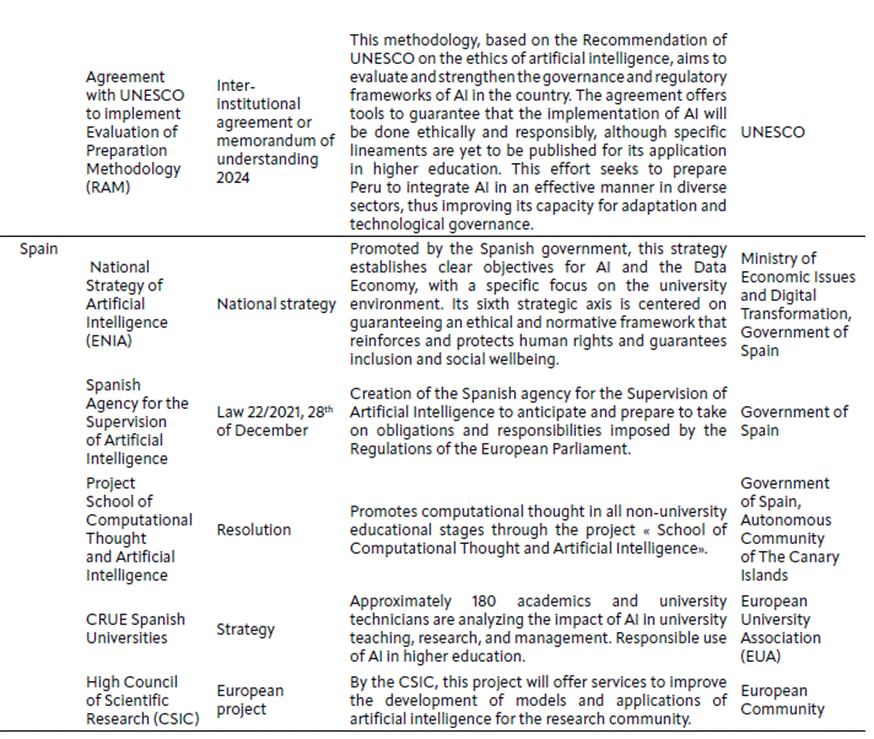
In the area of AI in Ibero-American countries, the regulatory panorama has experienced a significant evolution with the passing of the years. While some countries have consolidated robust strategies, and put them into practice, others face challenges in the implementation of effective policies. This disparity in the advance reflects the differences in national approaches towards the integration of AI, from the formulation of policies to putting them into practice. In the following section, an explicative synopsis is presented of these regulatory frameworks that makes it possible to see how each country has dealt with the regulation of AI, highlighting their levels of advance, challenges, and future perspectives in the implementation of strategies for artificial intelligence in higher education.
Argentina: Standstill in the implementation
Argentina, which in 2021 was classified with a developed AI policy with uncertain implementation, has shown little practical advance (Vercelli, 2024). Even though the Artificial Intelligence Plan published in 2019 continues to be a reference document, the lack of a solid institutional framework has impeded significant development. The situation in Argentina continues to be challenging, with limitations to advance beyond the initial planning (Ruíz, 2021).
In spite of the initial efforts to promote the use of AI, as evidenced in the creation of the Argentine Center for AI (CAMIA), the implementation of the TINA chatbot, and the National Plan of Artificial Intelligence (2019), the country still faces the lack of a clear and specific regulatory framework. CAMIA and TINA represent significant step towards the promotion and application of AI, but do not constitute an integral national policy. The absence of specific regulations for AI implies that the integration into higher education may be inconsistent and depend on individual initiatives instead of being supported by coherent public policies.
Although the National Plan of Artificial Intelligence seeks to foster formation and training in AI, as well as the development of capabilities and multi-sectorial collaboration, the need still persists for Argentina to further centralize its own regulation initiatives and stop focusing on foreign realities (Vercelli, 2024). Despite the interest in aligning with international standards, like the UNESCO recommendations on ethics in AI, the concrete implementation of these recommendations at a national level continues to be a challenge. This vacuum in the regulation reflects the complexity in establishing a regulatory framework that respects both human rights and national sovereignty, limiting the capacity of the country to implement AI effectively and sustainably in the area of education.
Brazil: From the promise to the challenges
In spite of its promising beginning in 2021, Brazil has faced difficulties in the effective implementation of its Brazilian Strategy of Artificial Intelligence. The strategy, which is in the process of implementation, has been affected by political obstacles and changing priorities, limiting its advance (Ruiz, 2021). Brazil is now found in a stage of uncertain implementation, requiring renewed efforts to consolidate its AI policy.
While it does have research centers in AI, Brazil faces legislative challenges and a lack of willingness to implement clear public policies. EBIA, published by the Ministry of Science, Technology, and Innovations in 2021, includes three transversal axes (legislation, regulation, and ethical use) and six vertical axes (education, work, training, entrepreneurship, production, and security). However, the lack of budget resources to develop these axes limits its practical implementation, leaving it on the plane of intentions without concrete implementation.
On the other hand, although the Law Projects Nº 5.051 of 2019, Nº 21 of 2020, and Nº 872 of 2021 in Brazil are centered on the general regulation of AI, it is possible to visualize possible implications for higher education. According to that reported by Pimentel (2023), there are some law projects that make up important regulations that could be beneficial for the advance of the regulatory plan of the country. One of these is Law Project Nº 5.051 of 2019, which establishes guidelines for AI safety and ethics, that could lead to universities adapting their curricula to align with these norms, promoting an academic formation that reinforces ethical practices in research with AI. For its part, Law Project Nº 21 of 2020 fosters the creation of a national strategy and a consulting committee that includes collaboration between the government, industry, and universities, in this way incentivizing greater academic integration in the formulation of combined policies and research projects. Finally, Law Project Nº 872 of 2021, by establishing parameters for legal security and transparency, can motivate universities to develop programs that meet these standards and strengthen alliances with industry in the formation and technological development of AI. Altogether, even though they do not specifically focus on higher education, these laws can significantly influence the way educational institutions deal with teaching, research and collaboration in the field of artificial intelligence.
Chile: A leader in the region
Chile has advanced considerably, consolidating its position as a leader in the region in terms of AI regulation and strategy, standing out for its focus on governance and strengthening capabilities. The Chilean National Strategy for Artificial Intelligence has been formalized and put into practice, marking noteworthy progress in the integration of AI in public policies and in technological development (Ruiz, 2021).
In this country, the regulatory development of artificial intelligence has been a process in evolution, with the National Policy of Artificial Intelligence, formalized through Decree 20 of the Ministry of Science, Technology, Knowledge, and Innovation in December 2021, as the main instrument at a national level (BCN, 2021). This policy establishes guidelines in social, economic, and formative aspects, prioritizing the wellbeing of people, sustainable development, inclusion, and adaptation to global surroundings in constant change. Recently, this instrument has been updated, having as its focus “technology at the service of people, centered on principles of ethics, inclusion, and responsibility” (Gobierno de Chile, 2024a, p. 5) and includes an Action Plan to ensure the coordinated and effective implementation of the policy through 177 initiatives distributed among 14 ministries (Gobierno de Chile, 2024b).
In parallel, the National Congress has presented different law projects, highlighting the one that seeks to regulate the “Artificial intelligence systems, robotics, and related technologies”, with the objective of protecting citizens’ fundamental rights and establishing an integral legal framework for its development and use in the country (Cámara de Diputados y Diputadas, 2023).
On the other hand, the Chilean Government has emitted Circular 711 that provides lineaments for the ethical and responsible use of artificial intelligence, directed at directors of public services and focused on aspects such as inclusion, transparency, privacy, and data security (Ministerio de Ciencia, Tecnología, Conocimiento e Innovación, 2023). This initiative reinforces the commitment of the country to the ethical implementation of artificial intelligence in public administration, complementing this with the current legislative efforts for an integral regulation of this emerging technology.
Perú: A promising takeoff
The adoption of AI in Peru is in its first stages, but it shows a growing interest and emerging capability. While Peru has taken some promising initial steps, it still does not have a clear and complete set of regulations to govern the use of AI in higher education. Law 31814 establishes programs to ensure its ethical and responsible implantation in educational institutions to improve educational services and learning processes (Congreso de la República del Perú, 2023).
The National Action Plan for Science, Technology, and Innovation 2021-2025 (CONCYTEC, 2021) is fundamental in this context as it promotes the integration of AI through the strengthening of research and development, the formation of specialized human capital, the updating of curricula, and improvement in technological infrastructure (CEPLAN, 2021). In addition, the National Strategy of Artificial Intelligence (ENIA) 2021-2026 seeks to encourage human talent in AI and scientific research, reducing the gender gap in formation programs in AI and fostering collaboration between academic institutions and the private sector for its application in education, among other key areas.
In parallel, Peru has signed an agreement with UNESCO in 2024 to implement the Evaluation of Preparation Methodology (RAM), based on the recommendation of UNESCO for ethics of artificial intelligence. This agreement aims to evaluate and strengthen governance and the regulatory frameworks of AI in the country, providing tools to guarantee an ethical and responsible implementation (UNESCO and Gobierno de Perú, 2024). Although specific lineaments for its application in higher education have not been published, this effort seeks to prepare Peru to integrate AI effectively in diverse sectors, improving its capability of adaptation and technological governance.
Spain: Advanced strategies in the regulation and application of AI in higher education
In Spain, the regulatory framework of AI is integrated into the National Strategy of Artificial Intelligence, which is part of the Digital Spain Strategy 2025. This strategy, promoted by the Spanish government, establishes clear objectives for AI and the Data Economy, with a special focus on the university area. Approximately 180 academics and university technicians are analyzing the impact of AI on university teaching, research, and management, aligning these efforts with the document of the Committee for Learning and Teaching of the European Universities Association (EUA) on the responsible use of AI in higher education.
Digitalization in all educational activities is a reality that brings with it changes in the process of teaching-learning in all education stages, but with greater relevance in higher education. For this reason, in the effort to generate guidelines for the use of AI in education, Spain has designed strategic plans, normative resolutions, and law decrees, supported by institutions like the High Council of Scientific Research (CSIC), which leads the European AI4EOSC Project, and the CRUE Spanish Universities (2023) that lends support in the universities’ process of digitalization to the Teaching and Learning Committee of the European Universities Association (EUA).
In terms of the strategic plans and agency for the supervision of AI, the Digital Spain Agenda 2025, encourages the use of AI though the National Strategy of Artificial Intelligence (ENIA), which is aligned with the objectives of the Agenda 2030 and with the recommendation of the OECD (2019b). Its sixth strategic axis is centered on guaranteeing an ethical and normative framework that reinforces and protects human rights and guarantees inclusion and social wellbeing (Ministerio de Asuntos Económicos y Transformación Digital, 2020).
In the same vein, to establish rules for the use of AI, the Spanish Agency of Artificial Intelligence Supervision has been created, passed by Law 22/2021 of General State Budgets for the year 2022, whose aim is to anticipate and prepare for the taking up of obligations and responsibilities imposed by the Regulations of the European Parliament. In educational terms, Spain has implemented the resolution of the 10th of May 2021 (Ministerio de Educación y Formación Profesional, 2021) that promotes computational thought in all non-university educational stages through the project «School of Computational Thought and Artificial Intelligence». This approach ensures that the student body receives adequate formation in AI from early stages, preparing students for the rigorous and ethical use of AI. Universities, in turn, will provide researchers with the knowledge and resources necessary to foster research and innovation in AI.
3.2 Projection and sustainability for the future considering regulatory flexibility
To guarantee an effective and ethical integration of AI in higher education in Ibero-America, it is essential to promote initiatives that allow its procedural implementation. The evidence of this study demonstrates that regulatory flexibility is a relevant strategy in this purpose, assuming possible regulation options such as the Sunset Laws, Regulatory Sandboxes, and Safe Harbor (Araya, 2020). In this respect, the European Union has known how to adopt and adapt these principles to foster technological innovation and deal with current challenges that include
AI.
The first framework, the Sunset Laws, are characterized by their temporality. These laws include a date of preestablished repeal that obliges lawmakers to reevaluate their efficacy at the end of defined period. This mechanism of reevaluation permits a continual adaptation to technological advances and eliminates barriers to innovation (López, 2021). In the context of higher education, the Sunset Laws facilitate the adoption of new educational technologies without the risk of facing out-of-date regulations. Furthermore, they stay relevant and effective through a mechanism of constant evaluation. In countries like Spain, the Sunset Laws have been successfully implemented to foster innovation in diverse sectors (López, 2021). However, in South America, the adoption of these laws is less common, although a certain level of growth is visible. Argentina, for example, has shown interest in implementing similar schemes to regulate emerging technology, although in a more limited way (Ruiz, 2021). In Brazil, regulatory flexibility has been manifested in laws that seek to adapt to the changing needs of the technological sector, even while the Sunset Laws have not been fully adopted. In Peru, the incorporation of similar mechanisms is in the discussion and development phase and in Chile there is a significant advance in these incorporations, with proposals to integrate flexible approaches that can be adapted to the speed of technological change (Ferrada & Irarrázaval, 2018). Considered together, the adoption of the Sunset Laws in these countries could contribute significantly to the modernization of the regulation of higher education, ensuring the guidelines fit emerging technological innovations.
The second framework, the Regulatory Sandboxes, offers a surrounding of controlled experimentation that allows innovative companies to operate under specific temporal restrictions. This model facilitates pilot programing of new AI applications in safe surroundings, without the fear of not meeting established guidelines. For universities, the Regulatory Sandboxes provide a space where they can implement and evaluate new technologies gradually, promoting a progressive comprehension and adaptation to the regulations (Ferrada & Irarrázaval, 2018; Guthrie, 2024), ensuring a safe and efficient takeoff of AI technologies in the academic area. Countries like Chile are advancing in this direction, with Regulatory Sandbox initiatives for fintech and other emerging technologies. However, in the case of Brazil, there was an advance but it requires greater sustainability within the current parameters (Ferrada & Irarrázaval, 2018). In Argentina, the concept has begun to be explored, particularly in the area of financial innovation (Araya Paz, 2020), while in Peru, even though it is still in initial stages, proposals are being evaluated for creating sandboxes in strategic sectors. In Spain, sandboxes have been successfully used in the financial sectors, which could serve as a model for their implementation in higher education (López, 2021). The adoption of Regulatory Sandboxes in these countries permits educational institutions to experiment with new AI technologies in a controlled and safe manner, facilitating their effective and regulated integration into the academic environment.
The third framework, the Safe Harbor, is presented as a legal disposition that exempts AI developers from responsibility under certain conditions. This model establishes specific requirements, such as monitoring mechanisms, emergency pauses, and continuous support to provide legal safety to the manufacturers and developers (Araya, 2020). In the area of education, the Safe Harbor protects institutions that develop or implement AI solutions, encouraging innovation while guaranteeing safety measures and a responsible use of emerging technologies. The European Union has widely adopted the Safe Harbor model in diverse sectors, including technology and data protection sectors. Chile has advanced in the implementation of Safe Harbor dispositions in its legislation on intellectual property rights and telecommunications (Rodríguez, 2021). In Brazil, the concept is present in the regulation of internet services, while in Argentina and Peru, although not as developed, there are debates and proposals for the introduction of Safe Harbor in sectors such as electronic commerce and technology (Pérez, 2022). Spain, for its part, has implemented dispositions of Safe Harbor in the area of intellectual property rights and data protection, which could be extended to the context of artificial intelligence (Gómez, 2020). The adoption of the Safe Harbor model in these countries provides a flexible and safe regulatory framework that fosters innovation in higher education, at the same time guaranteeing responsibility and safety in the use of AI technologies (Almeida y Ribeiro, 2023; Zohar y Twaig, 2019).
Together, these three flexible regulation frameworks offer an integral approach to managing artificial intelligence in higher education, facilitating innovation and ensuring a safe and adaptive environment when faced with rapid technological changes.
3.3 Panorama of incorporation of AI in higher education from the roles and levels of intervention
The integration of AI in higher education presents opportunities and challenges that require a highly structured regulation. This regulation must consider the diverse roles and levels of intervention of the actors involved: teachers, students, educational institutions, and national bodies responsible for educational policies.
Teachers: Considering that teachers play a crucial role in the implementation of AI in higher education, it is fundamental that they receive adequate formation in how to use AI tools effectively and ethically in their educational practice (Markauskaite & Goodyear, 2016). Furthermore, they must be aware of the ethical principles and norms of data protection associated with the use of AI in order to guarantee that their application in the classroom is safe and respectful of students’ privacy (Selwyn, 2016). Continuous training and professional development in the area of AI are essential so that teachers can integrate these technologies adequately into their teaching methods and research practices.
Students: The student body is the main beneficiary of the integration of AI into higher education, and thus it is important that they be educated in the responsible use of AI technologies, including comprehension of how the algorithms can influence their learning experiences and decision making (Binns, 2022). Educational programs must include components that teach students about AI ethics, data privacy, and the impact of technology on society (Zuboff, 2019). In addition, it is necessary to foster surroundings in which students can express their concerns and suggestions about the use of AI in their educational experiences.
Educational Institutions: Educational institutions have the responsibility of creating beneficial surroundings for the effective integration of AI. This includes the development of policies and guidelines that regulate the use of AI in teaching and administration, as well as the implementation of adequate technological infrastructures (Pérez-Ugena, 2024). Institutions must guarantee that the use of AI tools is accessible, safe, and aligned with educational objectives. Furthermore, it is crucial that monitoring and evaluation mechanisms are established to measure the impact of AI on educational quality and to adjust the policies whenever necessary (Siemens & Long, 2011).
National Bodies: The national bodies in charge of the regulation of higher education must design and apply policies that guide the implementation of AI in education institutions. This includes the creation of regulatory frameworks that ensure the ethical and safe use of AI, the promotion of research into emerging technologies, and the coordination with international entities to follow the best global practices (UNESCO, 2021c). These bodies must work in the elaboration of strategies and guidelines that include the regulation of AI, the fostering of cooperation between institutions, and the provision of resources for the formation and development of capabilities in the educational area (European Commission, 2020).
Collaboration and Coordination: Effective regulation of AI in higher education requires close collaboration between all the actors mentioned. The creation of committees or working groups that include representatives of teachers, students, educational institutions, and national bodies can facilitate coordination and ensure that
all the perspectives and needs are dealt with (European Commission, 2022). This approach will permit the development of more integral policies and practices that are adapted to the reality of each institution and country (World Economic Forum, 2020).
In summary, effective regulation of AI in higher education must take into account the responsibilities and needs of all the actors involved as it is only through a careful and coordinated integration that it will be possible to ensure that AI contributes positively to the educational process.
3.4 Similarities and differences in the countries’ regulatory frameworks facing the international scenario
In general, all the countries analyzed show a growing concern for the ethical and social challenges that AI presents, and the need for an ethical regulation to foster its responsible use (Pasquale, 2015). In this respect, the case of Spain is relevant as it establishes nation strategies for the integration of AI in its educational systems, placing emphasis on algorithmic transparency and the formation of human capabilities to mitigate the associated risks (European Commission, 2021d; Sabsalieva & Valentini, 2023).
In the context of artificial intelligence (AI) regulation in higher education in Ibero-America, it is possible to observe a notable common approach centered on formation and capacitation, along with shared challenges in implementation.
Formation and Capacitation: All the countries analyzed recognize the crucial importance of formation and capacitation in AI for the development of qualified human capital. In Chile, the National Policy of Artificial Intelligence (Ministerio de Ciencia, Tecnología, Conocimiento e Innovación, 2021) underlines the need for advanced formation in the field of AI, while Argentina deals with it through the National Plan of Artificial Intelligence (Presidencia de la Nación, 2019), that also prioritizes the strengthening of competencies in this area. Peru, for its part, emphasizes capacitation through the National Action Plan (CONCYTEC, 2021) and the National Strategy for Artificial Intelligence (ENIA) 2021-2026 (Ministerio de la Producción & CONCYTEC, 2021), highlighting its commitment to the development of specialized skills in AI. This concern for education and capacitation reflects a shared understanding that a solid base in AI is essential for technological and educational evolution.
Implementation challenges: All of the countries face significant obstacles in the effective implementation of their strategies in AI. In Argentina, a standstill is observed in the putting into practice of their policies, while Brazil faces challenges related to political obstacles and the absence of a specific law about AI. These challenges include limitations in the regulatory framework, lack of budget resources, and coordination problems between different institutions. These common problems reflect the difficulty of translating AI policies on paper into reality, a challenge that persists despite the commitment shared with innovation and development in the field of artificial intelligence.
On the other hand, notable differences arise between the countries examined that include the regulatory approaches, implementation, international collaboration, and the specific institutions involved. These differences are even more evident when considering the regional context in relation to the countries of Mercosur and Spain, that belongs to the European Union.
Regulatory approaches: Brazil, along with Chile, began the adoption of a more systematic and consolidated approach. Brazil has developed a Brazilian Strategy of Artificial Intelligence (EBIA; Ministério da Ciência, Tecnologia e Inovações (MCTI), 2021) that, despite facing challenges, shows an attempt to integrate a more cohesive framework (Sabsalieva & Valentini, 2023), but it did not have continuity. For its part, Chile stands out for its National Policy of AI of 2021 that was recently updated in 2024 and offers a clear and strategic regulatory framework (Araya, 2020). This country has implemented a National Policy of AI that clearly articulates the regulatory objectives and strategies at a national level. In contrast, Argentina faces significant challenges due to a lack of consistent regulatory frameworks that integrate all aspects of AI, which can limit its advance (Pimentel, 2023). Peru, even though it is in development with the National Action Plan (CONCYTEC, 2021) and the National Strategy of Artificial Intelligence (ENIA; Ministerio de la Producción & CONCYTEC, 2021), is in an earlier stage and faces challenges in the coordination and execution of its policies. Spain, on the other hand, has managed to establish a more robust and coordinated regulatory framework in the European context, in contrast with the limitations that the countries of South America face (UNESCO and Gobierno de Perú, 2024; Vercelli, 2024).
Implementation and Obstacles: The implementation of AI strategies presents significant variations among the countries. Brazil, in particular, faces important obstacles in implementation due to political and budgetary challenges that limit the progress of their Brazilian Strategy of Artificial Intelligence. In contrast, Spain has advanced in the creation of a regulatory framework and a digital agenda aligned with the guidelines of the European Union, which facilitates the integration of AI in higher education. Peru, on the other hand, is in the process of strengthening its policies through the National Action Plan (CONCYTEC, 2021) and ENIA (Ministerio de la Producción & CONCYTEC, 2021), facing its own challenges in coordination and execution. This disparity in implementation reflects the different political and economic realities faced by these countries, as well as the levels of institutional and strategic development. Chile is relevant for being the first country in the region to stand out for the advance in concretion in the regulatory frameworks.
International Collaboration: Chile and Peru keep up efforts with respect to international collaboration, exemplified by the signing of agreements with UNESCO to strengthen their regulatory framework in AI. This international dimension is less prominent, although not exclusive in other countries in the region, and centers mainly on the development and implementation of internal policies without such a marked focus on external collaboration. Countries like Argentina and Brazil, although they recognize the importance of collaboration, have shown less emphasis in specific international agreements. Spain, in its role as a member of the European Union actively participates in global and regional initiatives to harmonize AI policies, which allows it to influence and be influenced by a wider international framework.
4. Conclusions
The analysis of the regulatory frameworks in Spain, Chile, Peru, Brazil, and Argentina reveals significant variability in the level of advance and sustainability with respect to global educational policy, represented by the gaps that are a product of insufficient regulation and different normative levels that do not permit the concrete implementation of mechanisms to effectively incorporate AI into educational practices. While some countries, like Spain, have consolidated robust advanced strategies, others, like Peru, are in the initial stages but with promising perspectives. Chile occupies first place in the region, advancing systematically with the support of specific bodies and policies aligned with international ethical principles. Brazil, although it showed initial commitment, faces challenges in the consolidation of a cohesive and robust regulatory framework. The strategy, which was in the process of implementation, has been affected by political obstacles and changing priorities, limiting its advance. Argentina, for its part, is in an incipient stage due to instability in its politics and the lack of concretion of regulatory frameworks. The alinement with international regulations and ethical guidelines, such as those of UNESCO (2021a), the OECD (2019b) and the European Commission (2021d), is crucial in ensuring the responsible and equitable use of AI in higher education, highlighting the need for a collaborative and adaptive approach to face the challenges and make the most of the opportunities that AI offers.
The projection of the future and sustainability with respect to the incorporation of AI in higher education in the IberoAmerican countries reveals significant disparities in their development. One important strategy to have considered is regulatory flexibility, as is the case of Spain and of Chile, who have advanced notably in the implementation of adaptive regulatory frameworks: the Sunset Laws, the Regulatory Sandboxes, and the Safe Harbor. In this respect, Brazil faces political challenges that limit its progress in the implementation and regulatory flexibility. On the other hand, Argentina stays in an incipient phase due to political instability and the lack of clear frameworks. Finally, Peru shows promising potential, even though it is in the stage of definition and development. The adoption of flexible regulations is essential to manage the rapid technological evolution and ensure a responsible and effective AI integration in the academic area to promote innovation and guarantee data protection and specialized formation, which are critical elements for the advance of higher education in the region.
The key considerations for an effective incorporation of AI in higher education from the regulatory frameworks imply recognizing each role and integrating them synergically. Thus, teachers need continual formation in the ethical and effective use of AI tools, as well as knowledge in data protection to guarantee a safe and respectful application in the classroom and in their role as researchers. Complementary to this, students, as the main beneficiaries, must be educated in the responsible use of AI and a comprehension of its impact, promoting surroundings where they can express concerns and suggestions. Additionally, educational institutions must develop policies and guidelines that regulate the use of AI and encourage it, ensuring adequate technological infrastructure and establishing mechanisms to monitor and evaluate the impact on educational quality. In this way, national bodies represent an integrating sector for the policies generated and, thus, it is necessary that they responsibly take on the creation of regulatory frameworks pertinent to ethical and safe AI use and the promotion of research that considers emerging technologies, as well as the coordination with international bodies aligned with the best global practices. In definite terms, the joint action of the different actors is indispensable in establishing contextualized policies and practices that ensure a positive incorporation of AI in education.
The regulation of AI in higher education presents a global consensus on the need for ethical and responsible approaches, although their implementation varies noticeably. Spain, as part of the European Union, leads with a consolidated regulatory framework that integrates AI effectively and transparently. In contrast, the Mercosur countries, like Argentina, Brazil, Peru, and Chile, show less uniform approaches and significant challenges in practice. Argentina and Brazil face legal uncertainties and lack of coordination, while Peru advances in the formulation of policies, although in development stages. Unlike the other countries in the South American block, Chile stands out for being the country out in front due to the consistency and advance in its regulatory flexibility. The disparity in the maturity of the norms highlights the difference between the European approach, which is more integrated and aligned with the SDGs, and the fragmented efforts in the Mercosur. Ethics plays a crucial role in the regulation of AI, as a common need in the aspiration for sustainable development among all countries, beyond whatever block they may belong to. In the same vein, technology has to have a positive impact, promoting principles of equity, transparency, and protection of fundamental rights, above all in the educational environment. This requires designing and utilizing AI respecting the dignity and rights of all the actors involved in this process, avoiding biases and discrimination.
In terms of limitations, it is relevant to mention that one of the main limitations is related to the unequal availability of official and updated information from the countries analyzed, which made a homogenous comparison of their regulatory frameworks difficult. In the same way, considering the dynamic character of public policies on the subject of artificial intelligence, some of the documents analyzed could quickly become outdated. Finally, the analysis centered on normative and strategic sources, without considering studies of implementation or perceptions of institutional actors, which could be dealt with in future studies.
Declaraciones
Author contributions: Patricia Medina-Zuta: Project administration; Conceptualization; Data recovery; Formal analysis; Research; Redaction - original draft; Redaction - revision and editing. Pedro Sotomayor Soloaga: Conceptualization; Formal analysis; Methodology; Research; Redaction - original draft; Redaction - revision and editing. Gastón Becerra: Conceptualization; Formal analysis; Methodology; Research; Redaction - original draft; Redaction - revision and editing. María Estrella Alfonso Adam: Research; Redaction - original draft; Redaction - revision and editing. Ena Ysabel Kitsutani Barrenechea: Research; Redaction - original draft; Redaction - revision and editing. Analía Verónica Losada: Research; Redaction - original draft; Redaction - revision and editing.
Conflicts of interest The authors declare no conflict of interest in the elaboration or publication of this article.
Thanks
This study is framed in the initiatives of the Multi-country Collective of the International Community of Educational Research (CIIED) of the REDEM Group
References
- Almeida, F., & Ribeiro, M. (2023). Innovación y regulación de tecnologías emergentes en la educación superior: El papel del Safe Harbor. Revista de Educación y Tecnología, 19(2), 105-123.
- Araya, C. (2020). Desafíos legales de la inteligencia artificial en Chile, Revista Chilena de Derecho y Tecnología 9 (2), 257-290.doi.org/10.5354/0719-2584.2020.54489.
- Argentina (2021). Resolución 90/2021: Creación del Centro Argentino Multidisciplinario de IA (CAMIA). Secretaría de Asuntos Estratégicos de la Presidencia de la Nación.https://www.argentina.gob.ar/resolucion-90-2021.
- Binns, R. (2022). The ethical implications of artificial intelligence: Regulatory frameworks and policy considerations. Journal of Technology and Ethics, 15(2), 45-60.https://doi.org/10.1007/s10209-022-00823-4.
- Bray, M., Adamson, B., y Mason, M. (2014). Comparative education research: Approaches and methods. Springer.
- Cámara de Diputados y Diputadas de Chile (2023). Proyecto de ley sobre sistemas de inteligencia artificial, la robótica y las tecnologías conexas.https://www.camara.cl.
- Centro Nacional de Planeamiento Estratégico (CEPLAN). (2021). Inteligencia artificial: desafíos y oportunidades para el Perú.https://www.gob.pe/institucion/ceplan/informes-publicaciones/2296616-inteligencia-artificialdesafios-y-oportunidades-para-el-peru.
- Centro Nacional de Planeamiento Estratégico (CEPLAN). (2024). Fallo en la supervisión y regulación de la implementación de la IA. Observatorio Nacional de Prospectiva.https://observatorio.ceplan.gob.pe/ficha/r41_2024.
- Comité de Aprendizaje y Enseñanza de la Asociación Europea de Universidades (EUA) (14 de febrero de 2023). Herramientas de inteligencia artificial y su uso responsable en el aprendizaje y la enseñanza en la educación superior.https://www.eua.eu/resources/publications/1059:artificial-intelligence-tools-and-their-responsibleuse-in-higher-education-learning-and-teaching.html?utm_source=twitter&utm_medium=social&utm_campaign=social-twitter-14-02-2023.
- Congreso de la República del Perú (2023). Ley N° 31814: Ley de promoción del uso ético y responsable de la inteligencia artificial. Diario Oficial El Peruano.https://agnitio.pe/articulo/la-regulacion-de-la-inteligenciaartificial-en-el-peru-aspectos-clave-que-deberia-contener-su-reglamento/.
- Congresso Nacional do Brazil (2019). Projeto de Lei nº 5051: Directrices para la seguridad y ética en el uso de IA. Secretaría de Políticas de Digitalización del MCTI.https://www.brasil.gov.br/proyecto-ley-5051.
- Congresso Nacional do Brazil (2020). Projeto de Lei nº 21, de 2020. Câmara dos Deputados.https://www.camara. leg.br/propostas-legislativas/3456789.
- Congresso Nacional do Brazil (2021). Projeto de Lei nº 872, de 2021. Câmara dos Deputados.https://www.camara. leg.br/propostas-legislativas/4567890.
- Crue Universidades Españolas (21 de febrero de 2023). La EUA publica un documento sobre el uso de herramientas de inteligencia artificial en Educación Superior.https://www.crue.org/2023/02/crue-se-alinea-con-la-posturade-la-eua-sobre-el-uso-de-herramientas-de-inteligencia-artificial-en-educacion-superior/.
- European Commission (2020). White paper on artificial intelligence: A European approach to excellence and trust.https://ec.europa.eu/info/sites/default/files/commission-white-paper-artificial-intelligence-feb2020_en.pdf.
- European Commission (2021a). Estrategia europea de IA.https://ec.europa.eu/digital-strategy/our-policies/ european-approach-artificial-intelligence_en.
- European Commission (2021b). Regulation of The European Parliament and of the Council Laying Down Harmonised Rules on Artificial Intelligence (Artificial Intelligence Act) and Amending Certain Union Legislative Acts.https:// bit.ly/3z6uUid.
- European Commission (2021c). Artificial Intelligence Act: Proposal for a regulation of the European Parliament and of the Council laying down harmonized rules on artificial intelligence (Artificial Intelligence Act). European Commission.https://ec.europa.eu/info/publications/210421-artificial-intelligence-act_en.
- European Commission (2021d). Ethics guidelines for trustworthy AI.https://ec.europa.eu/digital-strategy/newsredirect/64365.
- European Commission (2022). Artificial intelligence in education: Opportunities and challenges.https://ec.europa.eu/education/sites/default/files/document-library-docs/ai-in-education_en.pdf.
- European Commission (2024). Ley de Inteligencia Artificial de la UE.https://artificialintelligenceact.eu/es/.
- Ferrada, R., & Irarrázaval, C. (2018, November 7). Los sandbox regulatorios como respuesta a la innovación. El Mercurio.https://bit.ly/2zYgB3h.
- Gobierno de Chile. (2024a). Política Nacional de Inteligencia Artificial: Actualización 2024. Ministerio de Ciencia, Tecnología, Conocimiento e Innovación.https://www.minciencia.gob.cl/areas/inteligencia-artificial/politicanacional-de-inteligencia-artificial/.
- Gobierno de Chile. (2024b). Plan de acción de la política nacional de inteligencia artificial: Actualización 2024. Ministerio de Ciencia, Tecnología, Conocimiento e Innovación.https://www.minciencia.gob.cl/areas/ inteligencia-artificial/politica-nacional-de-inteligencia-artificial/.
- Gómez, L. (2020). Disposiciones de Safe Harbor en la propiedad intelectual y protección de datos en España. Revista de Derecho y Tecnología, 12(3), 45-60.
- Guthrie, H. (2024). Los sandbox regulatorios financieros como herramienta de control a la potestad regulatoria discrecional de los Estados. Revista de Ciencias Humanas y Derecho, Universidad de Tarapacá.https://revistas.uchile.cl/index.php/RCHDT/article/view/72293.
- Krippendorff, K. (2018). Content analysis: An introduction to its methodology (4th ed.). SAGE Publications.
- Ley 22/2021, de 28 de diciembre, de Presupuestos Generales del Estado para el año 2022 (2021). Boletín Oficial del Estado, Núm. 312. Por la que se crea la Agencia Española de Supervisión de Inteligencia Artificial.
- Llamas, J.Z., Mendoza, O.A., y Graff, M. (2022). Enfoques regulatorios para la inteligencia artificial (ia). Revista chilena de derecho, 49(3), 31-62.Https://dx.doi.org/10.7764/r.493.2.
- López, F. J. (2021). La implementación de las Sunset Laws en la regulación de la inteligencia artificial en España. Revista de Derecho y Tecnología, 11(1), 25-47.
- Markauskaite, L., & Goodyear, P. (2016). The role of technology in education: Issues and opportunities. Educational Technology Research and Development, 64(1), 1-8.https://doi.org/10.1007/s11423-015-9400-6.
- Mercosur (2022). El Mercosur frente al cambio tecnológico y la transformación digital: Elementos para El Análisis.https://www.teleadvs.com/wp-content/uploads/El-mercosur-Raul-Katz.pdf.
- Millennium Project. (2023). International Governance Issues of the Transition from Artificial Narrow Intelligence to Artificial General Intelligence (AGI). The Millennium Project.https://www.millennium-project.org/publications/ agi-governance/.
- Ministerio De Asuntos Económicos y Transformación Digital (2020). Estrategia Nacional De Inteligencia Artificial (ENIA). Gobierno de España.https://portal.mineco.gob.es/es-es/digitalizacionIA/Paginas/ENIA.aspx.
- Ministerio de Ciencia, Tecnología, Conocimiento e Innovación. (2021). Política Nacional de Inteligencia Artificial. Gobierno de Chile.https://www.minciencia.gob.cl/areas/inteligencia-artificial/politica-nacional-deinteligencia-artificial/.
- Ministerio de Ciencia, Tecnología, Conocimiento e Innovación. (2021). Plan de Ciencia, Tecnología, Conocimiento e Innovación 2021-2030. Gobierno de Chile.https://www.minciencia.gob.cl/wp-content/uploads/2021/03/PlanCiencia-Tecnologia-Conocimiento-Innovacion-2021-2030.pdf.
- Ministerio de Ciencia, Tecnología, Conocimiento e Innovación; Secretaría General de la Presidencia. (2023, 11 de diciembre). Oficio circular N.º 711: Lineamientos para el uso de herramientas de inteligencia artificial en el sector público.https://minciencia.gob.cl/uploads/filer_public/ae/9a/ae9a7ce7-807b-4781-9ac3-9b253bfbe735/of_n711_2023_dis_lin_ia_minciencia.pdf.
- Ministerio de Educación y Formación Profesional. (2021, 10 de mayo). Resolución de 10 de mayo de 2021, de la Secretaría General Técnica, por la que se publica el Convenio con la Comunidad Autónoma de Canarias, para la promoción del pensamiento computacional en todas las etapas educativas no universitarias a través del proyecto «Escuela de Pensamiento Computacional e Inteligencia Artificial». Boletín Oficial del Estado (núm. 116).https://www.boe.es/boe/dias/2021/05/15/pdfs/BOE-A-2021-8087.pdf.
- Ministerio de la Producción y Consejo Nacional de Ciencia, Tecnología e Innovación Tecnológica (CONCYTEC). (2021). Estrategia Nacional de Inteligencia Artificial (ENIA) 2021-2026.https://www.gob.pe/institucion/concytec/documentos/estrategia-nacional-de-inteligencia-artificial-enia-2021-2026.
- OECD (2019a), Artificial Intelligence in Society. Paris: OECD Publishing.https://doi.org/10.1787/eedfee77-en.
- OECD (2019b). Recomendaciones sobre IA.https://www.oecd.org/going-digital/ai/principles/.
- OECD (2021). AI in education: Challenges and opportunities for development.https://www.oecd-ilibrary.org/education/ai-and-the-future-of-skills_45c0b306-en.
- Organización Mundial de la Propiedad Intelectual (OMPI). (2024). Artificial Intelligence and Intellectual Property Policy.https://www.wipo.int/about-ip/es/artificial_intelligence/.
- Pasquale, F. (2015). The Black Box Society: The Secret Algorithms That Control Money and Information. Harvard University Press.
- Pérez, R. (2022). Debates sobre la adopción de Safe Harbor en América Latina: Comercio electrónico y tecnología. Revista Latinoamericana de Legislación Tecnológica, 18(1), 77-93.
- Pérez-Ugena, F. (2024). Policy frameworks for artificial intelligence in higher education. Journal of Educational Technology, 15(2), 112-125.https://doi.org/10.1016/j.jeduc.2024.01.003.
- Pimentel, A. (2023). Regulación brasileña de la inteligencia artificial. Revista de la Facultad de Derecho de México, 73(287), 5-28.https://doi.org/10.22201/fder.24488933e.2023.287.86399.
- Presidencia de la Nación (2019). Plan Nacional de Inteligencia Artificial. Presidencia de la Nación.https://www.argentina.gob.ar/plan-nacional-ia.
- Rodríguez, F. (2021). Integración de Safe Harbor en la legislación de Chile y Brazil. Revista Jurídica de América Latina, 10(2), 101-119.
- Ruiz, K. (2021). Estrategias de Inteligencia Artificial en Ameríca Latina. Conclusiones a nivel regional. Empatía.la.http://hdl.handle.net/10625/61097.
- Sabsalieva, L., & Valentini, G. (2023). ChatGPT and artificial intelligence in higher education: quick start guide. UNESCO Report.
- Salmi, J. (2017). The Tertiary Education Imperative: Knowledge, Skills and Values for Development. Sense Publishers.
- Secretaría de Innovación Pública (2022). Resolución 14/2022: Implementación del Chatbot TINA. Secretaría de Innovación Pública.https://www.argentina.gob.ar/resolucion-14-2022.
- Selwyn, N. (2016). Education and technology: Key issues and debates. Critical Perspectives on Education, 7(1), 2235.https://doi.org/10.1080/17508487.2016.1146212.
- Siemens, G., & Long, P. (2011). Penetrating the fog: Analytics in learning and education. Educational Technology Research and Development, 59(1), 145-151.https://doi.org/10.1007/s11423-010-9206-9.
- UNESCO & Gobierno de Perú (2024). Acuerdo para la Implementación de la Metodología de Evaluación de Preparación (RAM) basada en la Recomendación sobre la ética de la inteligencia artificial. Lima: UNESCO.https://unesdoc.unesco.org/ark:/48223/pf0000385198.
- UNESCO (2012). Clasificación Internacional Normalizada de la Educación: CINE 2011. UNESCO.https://unesdoc.unesco.org/ark:/48223/pf0000217613.
- UNESCO (2015). Education 2030: Incheon Declaration and Framework for Action: Towards inclusive and equitable quality education and lifelong learning for all.https://unesdoc.unesco.org/ark:/48223/pf0000245656.
- UNESCO (2019). Artificial Intelligence in Education: Challenges and Opportunities for Sustainable Development. United Nations Educational, Scientific and Cultural Organization.https://unesdoc.unesco.org/ark:/48223/pf0000366994.
- UNESCO (2021a). Recomendación sobre la ética de la inteligencia artificial.https://unesdoc.unesco.org/ark:/48223/pf0000380455_spa.
- UNESCO (2021b). AI and education: Guidance for policy- makers.https://unesdoc.unesco.org/ark:/48223/ pf0000376709.
- UNESCO (2021c). Recommendation on the ethics of artificial intelligence. UNESCO.https://unesdoc.unesco.org/ark:/48223/pf0000381137.
- UNESCO (2022a). Recomendación sobre la ética de la inteligencia artificial.https://unesdoc.unesco.org/ark:/48223/pf0000381137_spa.
- UNESCO (2022b). Reimaginar juntos nuestros futuros. Perfiles Educativos, 44(177), 200-212.https://perfileseducativos.unam.mx/iisue_pe/index.php/perfiles/article/view/61072.
- UNESCO (2024a). La inteligencia artificial generativa en la educación: ¿Cuáles son las oportunidades y los desafíos?https://www.unesco.org/es/articles/la-inteligencia-artificial-generativa-en-la-educacion-cuales-sonlas-oportunidades-y-los-desafios.
- UNESCO (2024b). Towards an ethics of artificial intelligence. Un Chronicle.https://www.un.org/en/chronicle/ article/towards-ethics-artificial-intelligence.
- Vercelli, A. (2024). Regulaciones e inteligencias artificiales en Argentina. Inmediaciones de la Comunicación, 19(1), 52-74.https://doi.org/10.18861/ic.2024.19.1.3549.
- Wolhuter, C.C. (Ed.) (2019). The Legacy of Jullien's Work for Comparative Education. Routledge.
- World Economic Forum (2020). Regulating artificial intelligence: A global perspective. World Economic Forum.https://www.weforum.org/reports/regulating-artificial-intelligence-a-global-perspective.
- Zohar, N., & Twaig, A. R. (2019). Safe Harbors in Artificial Intelligence Regulation: A Study of Liability and Exemptions. Journal of International and Comparative Law, 6(2), 33-35.
- Zuboff, S. (2019). The age of surveillance capitalism: The fight for a human future at the new frontier of power. PublicAffairs.
Notes
- Ethical implications There are no ethical implications to declare in the elaboration or publication of this article.