ABSTRACT
The mobile phone is a central element in the daily life of students and their interactions; however, excessive use could negatively affect some essential competences such as social skills and emotional regulation, mainly in the school context. Objective: to describe the social interactions of students between 13 and 19 years old during recess in the presence of cell phones and to analyze the impact on social skills and emotional regulation. Methodology: mixed approach, whose design considered non-participant observations and questionnaires. A sample of 141 students from two schools in Chile. Data collection techniques include field notes, illustrated records, and questionnaires with acceptable reliability (Cronbach's Alpha = 0.7). Analysis: qualitative data analyzed ethnographically, and quantitative data processed in SPSS 26. Results and findings: observations revealed that students interact by talking, playing, or walking, with the mobile phone as a disruptive element. The questionnaires showed that greater cell phone use is associated with lower social skills (correlation = -0.173, p = 0.041) and emotional regulation (correlation = -0.368, p < 0.001). Originality or value: The study underlines the importance of the school space for socioemotional learning and warns about the risks of excessive cell phone use, highlighting the need for strategies that promote responsible use.
KEYWORDS: Mobile phone; social interaction; social development; affective development; learning
RESUMEN
El teléfono móvil es un elemento central en la vida diaria de los estudiantes y en sus interacciones, sin embargo, un uso excesivo podría afectar negativamente algunas competencias esenciales como habilidades sociales y regulación emocional principalmente en contexto escolar. Objetivo: describir las interacciones sociales de estudiantes entre 13 y 19 años durante los recreos en presencia del teléfono móvil y analizar el impacto en las habilidades sociales y regulación emocional. Metodología: enfoque mixto, cuyo diseño consideró observaciones no participantes y cuestionarios. Muestra de 141 estudiantes de dos colegios en Chile. Técnicas de recolección de información, notas de campo, registros ilustrados, cuestionarios con fiabilidad aceptable (Alpha de Cronbach = 0,70). Análisis: datos cualitativos analizados etnográficamente y datos cuantitativos procesados en SPSS 26. Resultados y hallazgos: las observaciones revelaron que los estudiantes interactúan conversando, jugando o paseando, con el teléfono móvil como elemento disruptivo. Los cuestionarios mostraron que un mayor uso del teléfono móvil se asocia con menores habilidades sociales (correlación = -0,173, p = 0,041) y regulación emocional (correlación = -0,368, p < 0,001). Originalidad o valor: el estudio subraya la importancia del espacio escolar para el aprendizaje socioemocional y advierte sobre los riesgos del uso excesivo del teléfono móvil, destacando la necesidad de estrategias que promuevan su uso responsable.
PALABRAS CLAVE: Teléfono movil; interacción social, desarrollo social, desarrollo efectivo, aprendizaje
1. Introduction
Everyday social interactions, described by Berger and Luckmann (2003; 1966), are fundamental to constructing reality and developing reasoning and common sense. These interactions not only construct individual reality, but also contribute to the construction of a shared and objectified social reality through processes of internalization and externalization (Berger, 2003; Berger & Luckmann, 1966). Educational research allows us to understand the meanings of these experiences, identifying problems arising from school experiences. According to Thompson (2007), we live in a mediatized culture, where social interactions have changed with the advancement of media communication and mobile devices, allowing relationships without a shared physical space. In this media context, the objectification of social interactions can be influenced by the selective presentation and interpretation of information available in the media.
In this sense, the school environment is key to observing everyday coexistence and how students and teachers share knowledge and interactions, reflecting worldviews through actions, attitudes, and symbols. The school, as a social institution, plays a fundamental role in the transmission and legitimization of social meanings and norms (Berger, 2003; Berger & Luckmann, 1966), offering a space for the collective construction of reality. These dynamics make it relevant to study social interactions mediated by digital devices, especially mobile phones, whose presence is constantly growing, driven mainly by connectivity, as evidenced during the pandemic (Arshad, 2021; Lee et al., 2021; Yang et al., 2020).
According to the latest report from the Chilean Undersecretary of Telecommunications (Subsecretaría de Telecomunicaciones de Chile, 2023), the number of mobile phone users in the country has reached 26.7 million, representing a 10% increase compared to the 16 million registered in 2009. By December 2023, Chile had reached a penetration rate of 133.4 mobile phone subscribers per 100 inhabitants. On the other hand, a joint report by UNICEF and the Chilean Ministry of Education (UNICEF & Ministerio de Educación de Chile, 2022) reveals that 87% of children and adolescents have their own mobile phone with internet access, and the mean age at which they receive their first device is 8.9 years. In terms of distribution by age group, there is a progressive increase in mobile phone ownership as age increases: in the 8-12 age group, 81% of minors have a device, a figure that rises to 94% in the 14-17 age range. Therefore, when considering this scenario, the need to analyze the impact of phones on social interactions at school is highlighted.
This study is based on the assumption that unregulated use of mobile devices in the school context can displace face-to-face social interactions, negatively affecting the development of social skills and emotional regulation in students. This view is based on previous research that has demonstrated an association between excessive screen use and social isolation (Lin et al., 2016), along with difficulties in emotional regulation (Draženović et al., 2023). Given this background, and given that social interaction is key to socialization, the acquisition of social skills, and emotional regulation, this study aims to describe the social interactions of students between the ages of 13 and 19 during recess in the presence of mobile phones and to determine the relationship between their use, social skills, and emotional regulation.
2. Theoretical framework
2.1. Interaction in the school context: Social relationships and human development during recess.
Everyday social interactions, understood as the dynamic process through which individuals construct reality, develop reasoning, and share meanings (Berger, 2003), are fundamental to adolescent development and socioemotional well-being (Xu et al., 2022). Traditionally, the school environment has been a privileged setting for these interactions, facilitating coexistence, learning, and identity formation (Chaves Álvarez, 2013). However, the growing mediatization of culture (Thompson, 2007) and the ubiquity of digital devices, especially mobile phones, have radically transformed the landscape of social interactions in schools and affected the mental health of young people and adolescents in particular (Carvacho et al., 2021).
In Chile, this transformation has been accelerated by the high penetration of mobile phones among students, reaching 26.7 million users(Subsecretaría de Telecomunicaciones de Chile, 2023), with 87% of children and adolescents owning their own mobile phone with internet access (UNICEF & Ministerio de Educación de Chile, 2022). In addition, the educational policies implemented during and after the COVID-19 pandemic, which promoted the use of digital platforms and personal devices to ensure the continuity of distance learning, have created both opportunities and challenges for social interactions in the school environment.
During the crisis, the Chilean Ministry of Education promoted various measures to support the continuity of the educational process through digital media. These actions included providing online teaching platforms to institutions that lacked them, allocating resources to promote and strengthen virtual education initiatives, and establishing collaborations with universities and institutes to train teachers in the use of these tools (Villarroel et al., 2021). The policies, which promoted the use of platforms such as Aprendo en Línea, Biblioteca Escolar Digital, and Google Suite, and the delivery of devices to low-income students, were essential to ensuring access to distance education. However, they also generated new dynamics of social interaction in the classroom, with students increasingly connected to their devices and less involved in face-to-face activities.
Recent research suggests that these policies have had mixed effects on students' emotional well-being. Research from the Universdad de Las Américas revealed that more than 60% of schoolchildren showed symptoms of depression, anxiety, and stress, with adolescent girls and those living in vulnerable family contexts being the most affected (Martínez-Líbano & Yeomans-Cabrera, 2024). In the university setting, a report by the Núcleo Milenio Imhay & Universidad Diego Portales (2021) showed that 82.5% of students had difficulty concentrating and 77.7% experienced a significant deterioration in their mood compared to the period before the pandemic.
Similarly, the Universidad de Valparaíso reported that 74% of higher education students experienced moderate or severe depressive symptoms during lockdown, associated with factors such as social isolation, overexposure to screens, and difficulties in accessing connectivity (Carvacho et al., 2021). These results underscore the urgency of addressing the social and affective component in any education strategy, both remote and face-to-face, especially in emergency contexts.
In this scenario, emotional regulation, defined as the ability to influence one's own emotions (Gross, 2015), plays a fundamental role in the well-being and social functioning of adolescents (Silk et al., 2003). Effective emotional regulation is associated with better interpersonal relationships, greater academic success, and a lower risk of psychopathologies (Eisenberg et al., 2007). However, problematic use of mobile devices has been linked to difficulties in emotional regulation (Álvarez Menéndez & Moral Jiménez, 2020; Xu et al., 2022), impulsivity (Billieux et al., 2008), and low self-esteem, which could negatively affect students' social interactions in the school context. Recent studies have shown that excessive use of social media is associated with a reduced ability to regulate negative emotions (Sinha et al., 2021) and greater vulnerability to anxiety and depression (Ulvi et al., 2022).
On the one hand, ICT (Information and Communication Technologies) can promote collaborative learning (Choy & Cheung, 2022), the development of creativity and critical thinking, along with participation in supportive virtual communities (Ito et al., 2013). On the other hand, several studies warn about the risks associated with excessive use of digital devices, including a decrease in face-to-face interactions (Misra et al., 2016), increased social isolation (Lin et al., 2016), addiction to social media (Elhai et al., 2017; Xu et al., 2022), and the deterioration of psychological wellbeing (Draženović et al., 2023). These findings, which highlight the complexity of the phenomenon, underscore the need to analyze how the use of digital devices affects the social skills and emotional regulation of secondary school students in the school context.
Within this theoretical and empirical framework, the present study aims to describe the social interactions of secondary school students during recess in two Chilean schools, analyzing the relationship between mobile phone use, social skills, and emotional regulation. This research seeks to contribute to the design of strategies that promote healthy and responsible use of digital technologies, fostering the social and emotional development of students in the school environment.
3. Method
The research design is based on a mixed methodological paradigm, which integrates qualitative and quantitative approaches to address the research problem and make inferences (Johnson et al., 2007). Specifically, a structured approach is adopted under an Exploratory Sequential Design (DEXPLOS) (Creswell, 2008) that allows the construction of the intervention to be articulated with its subsequent empirical evaluation (WHAT → HOW MUCH). In the first phase of development, which is qualitative in nature, the conceptual frameworks and existing empirical evidence are integrated, together with contextual inputs obtained through exploratory dialogue with educational participants, who provide inputs for the development of the initial design of the quantitative intervention.
The mixed methodology does not seek to replace one approach or the other, but rather to leverage their strengths and mitigate their weaknesses. It is based on the pragmatic paradigm, promoting collaboration between researchers from different paradigms to expand knowledge (Johnson & Onwuegbuzie, 2004; Maxcy, 2003). The combination of qualitative and quantitative approaches offers better opportunities to address significant research questions (Hernández Sampieri & Mendoza Torres, 2023).
The study was conducted in two Chilean schools: a private school in the municipality of La Florida, Santiago Metropolitan Region (RM), and a free public school in the municipality of Pinto, Ñuble Region (RÑ), with secondary school students aged between 13 and 19 as participants. The first school is characterized by extensive green areas and designated recreational spaces. Its student body comes from middle and upper income socioeconomic strata, and the institution primarily enrolls students residing in the southeastern municipalities of the Metropolitan Region. The second school is located in a rural municipality of the RÑ in south-central Chile. Its students belong to low and middle socioeconomic strata, whose families are mainly engaged in agricultural and tourism work.
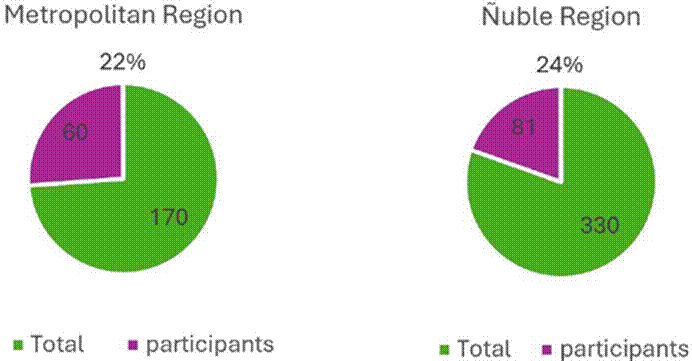
Figure 1 shows the distribution of student participation according to school. The school in the RM had a participation rate of 22% of its total secondary school population, and the school in the RÑ had a participation rate of 24%.
3.1 Procedure
The questionnaire metric used a Likert-type analog and multiple response model. This response model allowed participants to express their degree of agreement with the questions, enabling them to express their point of view on the proposed topics.
The data collection instruments were selected according to the methodological approach. For the qualitative part, non-participant observation of students' social interactions during break time was used. This was carried out in two schools: in the RM between March and April 2022, and in the RÑ between May and June 2022. At the first school, photographic records and field notes were obtained, while at the second school, only notes and sketches were taken. In both cases, the information was saturated, meaning that no new data emerged.
For quantitative data collection, an ad hoc questionnaire was administered with closed-ended questions about cell phone use, social skills, and emotional regulation using a Likert-type response model.
At the RM school, the questionnaire was administered in October 2022, in a hybrid format, and at the RÑ school, in April 2023, in person. The questions were adapted from previous studies: some of the questions used in this study were taken from other studies and adapted to the research. The questions on frequency of mobile phone use were based on the Smartphone Usage Questionnaire (Ellis et al., 2019). The questions on emotional regulation were based on the DERS Test (Westerlund & Santtila, 2018). Social skills questions were taken from the Social Skills Assessment - Adolescent (Goldstein & McGinnis, 1997). Thus, the instrument developed contained three dimensions, namely: frequency of mobile phone use, social skills, and emotional regulation, with 10 questions per item.
3.2 Analysis plan
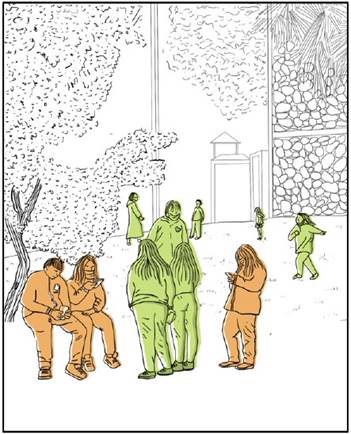
The qualitative information was analyzed using detailed transcripts of the field notes. Subsequently, the photographic record was transformed into illustrations, using a specific color code to visually distinguish the types of interaction observed: the color green represents interactions without the use of a mobile phone, while the color orange identifies interactions in which the mobile phone is present. This process made it possible to generate a comprehensive ethnographic description of the social interaction dynamics that took place during recess.
The quantitative analysis was carried out using statistics from the data obtained through the questionnaire, which were analyzed using Microsoft Excel 365 and IBM SPSS 26 software: First, the reliability of the questionnaire instrument was analyzed for each of the dimensions (variables) of the study, namely: mobile phone use, social skills, and emotional regulation, using Cronbach's alpha (α) test.
Subsequently, a descriptive statistical analysis of the sociodemographic variables and a descriptive statistical analysis of the study variables were performed. Finally, a correlational analysis was performed to establish the relationship between mobile phone use and the social skills and emotional regulation of secondary school students.
3.3 Reliability of the measurement instrument.
In this subsection, the reliability of the instrument was analyzed using Cronbach's α based on the following range:

The reliability analysis shows that the instrument is reliable, despite the sample size, maintaining high or moderate indicators for each established dimension (Table 2).

In summary, the instrument applied shows acceptable reliability in two of its three dimensions, while the social skills dimension needs to be strengthened to achieve an adequate standard of consistency.
3.4 Ethical aspects
This study considered Chilean laws No. 19,628 on the Protection of Privacy (Biblioteca del Congreso Nacional, 2012 n/p) and No. 20,120 on Scientific Research on Human Beings (Biblioteca del Congreso Nacional, 2012, n/p), as well as the ethical aspects proposed by the Universal Declaration on Bioethics and Human Rights of the United Nations Educational, Scientific and Cultural Organization (Rostión, 2015).
In this context, the research, together with its annexes, including consents and authorizations, was sent to the ethics committee and approved in April 2021. Subsequently, and for the purposes of initiating the study, both administrators, guardians, and students signed the documents informing them about the research and the role of each of the participants.
4. Results
The results of the study based on the mixed methodological approach are presented below. The first stage presents the results obtained from the qualitative study, which considers the information collected in the non-participant observation, and the second stage presents the results of the quantitative study of the data that emerged from the questionnaires administered to secondary school students, which were statistically analyzed in the SPSS 26 program.
4.1 Ethnographic description
This section describes the interactions between secondary school students during recess at the two schools participating in the study. The orange images show students looking at their cell phones, and the green images show students interacting with their classmates without their devices.
4.1.1 Day-to-day life
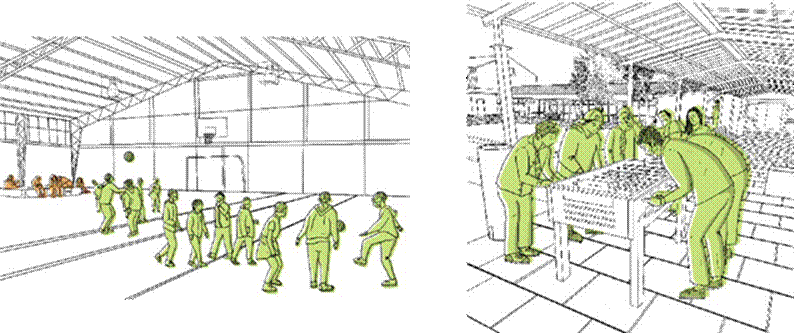
At the beginning of the first recess, students from both schools gather in the playground, forming conversation circles and play groups. The conversation groups are located in sunny areas, where they eat their snacks and chat closely together. The play groups are distributed between the gym and the game tables in the playground, such as foosball and ping pong. These interactions are similar and are repeated every day with the same people in the groups.
Recess generally passes quietly and pleasantly, without conflict. However, after a few minutes, students begin to look at their cell phones, losing interest in their classmates. Some separate from their conversation groups to focus on their devices. In the play groups, although the students remain focused on their activities, some look at their phones from time to time or slowly withdraw from group interactions, as can be seen in Figure 2.
Note: Interactions without cell phones are shown in green and interactions with cell phones are shown in orange.
The significant use that students make of the spaces and elements provided for physical activity and interaction is an aspect that stands out in their routines. In the first school, the gym becomes a fundamental space for recreation where students gather around games, as can be seen in Figure 4. In the second school, there are no other meeting or recreation areas; instead, all interaction takes place in the central courtyard, limiting the setting and elements for socialization. In this context, the game tables play a fundamental role for the students.
Note: Interactions without mobile phones are shown in green and interactions with mobile phones are shown in orange.
Peer interaction takes the form of encounters between friends, with laughter, knowing glances, and physical contact. However, some students do not belong to any of the aforementioned groups and tend to keep themselves company with their cell phones, in some cases alone and in others with their peers, as shown in Figure 4. During these situations, concerns arise regarding the reason behind this behavior and whether cell phones are the cause of such loneliness and indifference towards others.
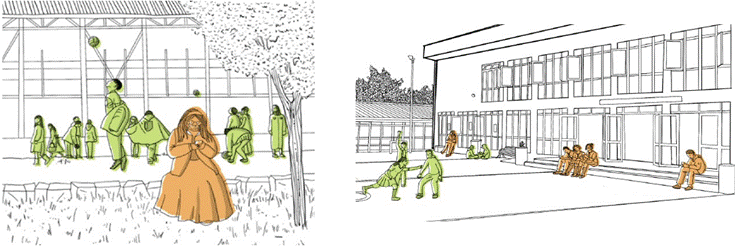
Note: Interactions without cell phones are shown in green and interactions with cell phones are shown in orange.
It can be seen that boys are more likely to use the device to play games, while girls are more likely to share it: they generally use it to listen to music, take photos, or show the screen. There is greater interaction among them, more conversation, and more social activity. It is also common to see mixed groups walking around the playground and through the hallways, arm in arm, talking, laughing, and listening to music. They may spend the entire recess doing this; they seem entertained and willing to spend their break time on the move, as shown in Figure 5.
Note: Interactions without cell phones are shown in green and interactions with cell phones are shown in orange.
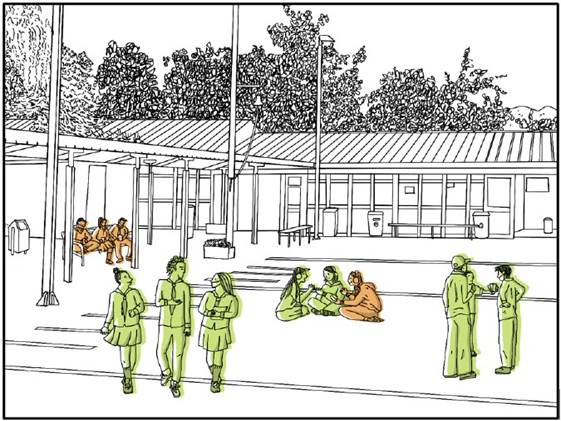
Social interactions between students during recess generally maintain a steady pace and are constant over time. The closeness between them is clearly observed through the conformity of the interaction groups and the demonstration of gestures of affection and trust. However, situations of loneliness and social inactivity are also a factor that characterizes these encounters.
Finally, the cell phone is shown to be an element that accompanies and is present across both educational establishments, where some students interact with their peers while the phone is present, others interact only with the device, and others hold the device without paying attention to it during encounters. Undoubtedly, it is an element that characterizes social interactions and that is present to a greater or lesser extent depending on the personal characteristics, interests, and activities that students engage in during recess.
4.2 Quantitative analysis
In the descriptive analysis of the sociodemographic variables, Figure 6 shows the percentage values of the gender variable with its categories: female, male, and prefer not to say. It shows that females represent 46.8% (66 cases) of the sample, males 49.6% (70 cases), and 3.5% (5 cases) preferred not to report their gender.
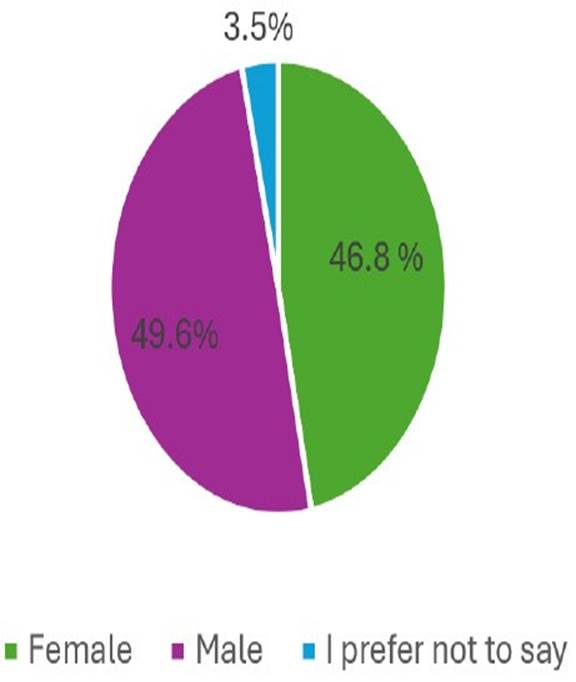
Figure 7 shows the percentage values for the school variable with its respective categories: it shows that students attending school in the Metropolitan Region represent 44% (62 cases) of the sample, while those attending school in the Ñuble Region represent 56% (79 cases).
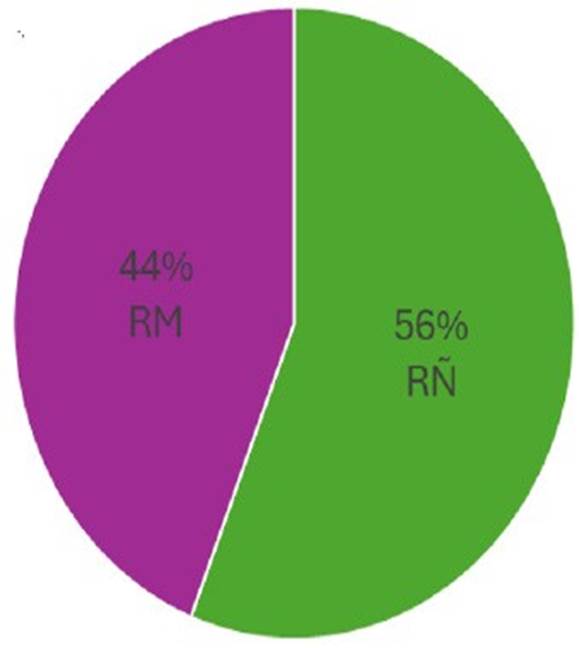
Table 3 shows the descriptive statistics for the students' age, overall grade point mean, and number of friends. In terms of age, the mean was 15 years, the median was 16 years, and the mode was 15 years. The asymmetry value of 0.598 indicates a right-skewed distribution, with a higher concentration of data at the lower values, while the kurtosis value of 0.188 indicates a leptokurtic distribution, i.e., with a frequently recurring mode. The minimum age was 13 and the maximum age was 20.
Regarding the mean grade, the mean was 6.091, the median was 6.200, and the mode was 6.000. It is important to mention that the grading scale in Chile ranges from a minimum of 1.000 to a maximum of 7.000 (excellent), where the minimum passing grade for a course is 4.000. The asymmetry of 0.486 also reflects a rightward skew, and the kurtosis of -0.570 suggests a more flattened platikurtic distribution. The minimum mean was 4.500 and the maximum was 7.000.
Regarding the number of friends, the mean was 4.42, with a median and mode of 5 friends.
The asymmetry of -1.838 indicates a left skew, with a concentration of data at higher values, and the kurtosis of 2.462 indicates a leptokurtic distribution, with a frequently repeated mode. The minimum number of friends was 1 and the maximum was 5 or more.
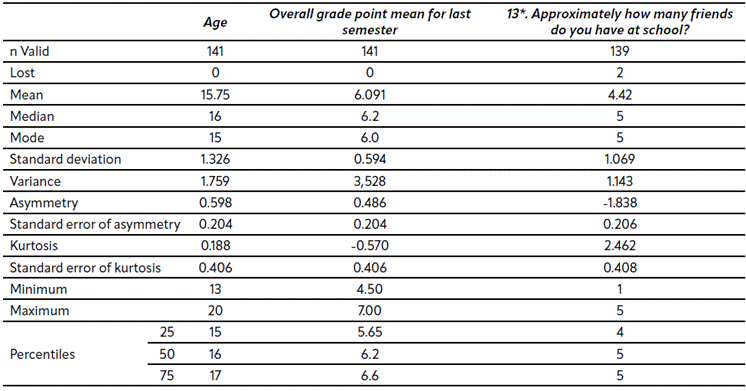
Table 4 presents the descriptive statistics for the study variables: mobile phone use, social skills, and emotional regulation. Regarding mobile phone use, the mean score was 22.87, indicating moderate use. The median was 22 and the mode was 19. The asymmetry of 0.599 suggests a right-skewed distribution, and the kurtosis of 0.174 indicates a leptokurtic distribution, where the mode is repeated several times. The minimum score was 10 and the maximum was 43.
Regarding social skills, the mean score was 8.78, which also reflects a moderate level. The median was 9 and the mode was 10. The asymmetry of 2.025 indicates a right-skewed distribution, and the kurtosis of 4.07 shows a leptokurtic distribution, with the mode concentrated at the top of the distribution. The minimum score was 2 and the maximum was 10.
In terms of emotional regulation, the mean score was 25.87, reflecting a moderate level. The median and mode were 27. The asymmetry of 0.204 shows a slight right skew, while the kurtosis of 4.06 also indicates a leptokurtic distribution. The minimum score was 14 and the maximum was 35. These results show moderate variability in each of the variables analyzed.
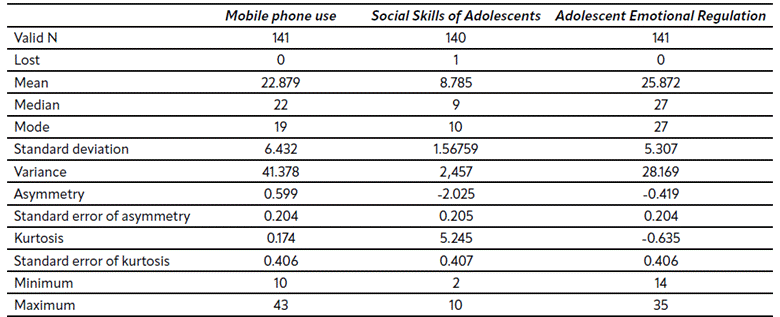
Figure 8 shows the orientation of the scatter plot, which indicates that as the use of mobile phones increases, social skills decrease.
Note: Figure in Spanish.
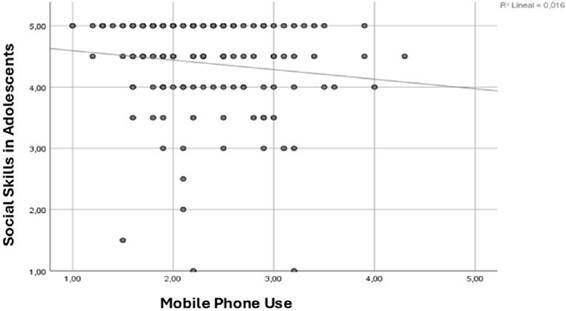
Figure 9 relates mobile phone use to the social skills of adolescents. The scatter plot is concentrated around high regulation values (4-5) when mobile phone use is low (1-2), and tends toward slightly lower values as use increases. Thus, the trend line slopes downward, indicating an inverse relationship: the greater the use of the device, the lower the mean emotional regulation tends to be. The coefficient R² = 0.148 suggests that this relationship explains only ≈ 15% of the variability, so the association is weak; most of the differences in emotional regulation are due to other factors not represented in the graph.
Note: Figure in Spanish.
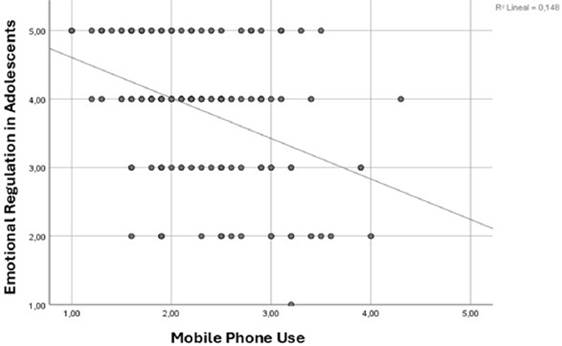
Table 5 shows the results of applying Spearman's nonparametric correlation test, since the data were not normally distributed, in order to correlate the study variables with each other. It can be seen that in all crossings the significance was greater than 0.050.
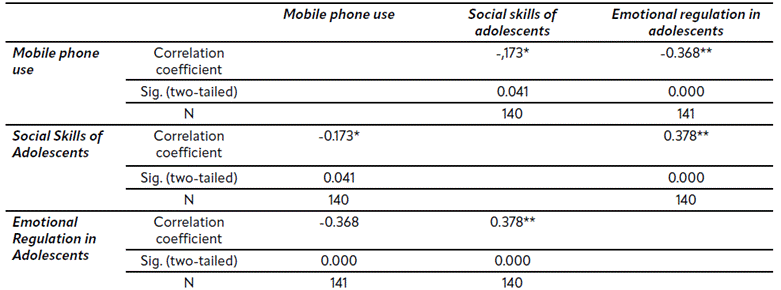
* The correlation is significant at the 0.05 level (two-tailed).
** The correlation is significant at the 0.01 level (two-tailed).
The analysis shows that the cross between the variables Mobile Phone Use and Social Skills has a significance of less than 5% (sig. = 0.041), where the correlation coefficient is -0.173, indicating a negative correlation between both variables; that is, as one increases, the other decreases. Thus, mobile phone use is slightly associated with lower social skills. This use shows a moderate and negative relationship with Emotional Regulation (r = −0.368), suggesting that more time on the device is linked to poorer emotional management. Social Skills and Emotional Regulation are moderately and positively related (r = 0.378): those who regulate their emotions better also tend to show better social skills.
Overall, the pattern reinforces the idea that increased cell phone use is linked to certain socio-emotional setbacks, while the two personal competencies (social skills and emotional regulation) are mutually reinforcing. Like all correlational analyses, this describes association and does not imply causation.
5. Discussion
By describing social interactions among secondary school students in the school context during recess, ethnographic work allows us to understand the school space as a place for meeting and socializing. Here, students gather around conversation, games, and walks, motivated and encouraged to engage in activities outside the classroom, in line with Chaves Álvarez's proposal (2013). These encounters facilitate face-to-face interaction, which is crucial for the development of social and emotional learning (Berger, 2003). However, ethnographic observation reveals that although mobile phones do not always capture attention constantly, they appear as a regular companion during moments of interaction, modulating their frequency according to the activities carried out by students. This shows that mobile phone use is more frequent when students lose focus on their friends and concentrate their gaze on the device, even separating themselves from the group and remaining alone with their phone. This dynamic, in which interaction with the cell phone takes precedence over face-to-face encounters, coincides with findings that suggest that excessive use of digital devices can displace face-to-face interactions, negatively affecting the development of social skills (Lin et al., 2016; Misra et al., 2016). On the other hand, the frequency of phone use decreases when students participate in recreational and interactive activities, such as going out with friends or playing sports. This finding suggests that participation in meaningful face-to-face activities can act as a protective factor, reducing dependence on mobile phones and promoting healthier interactions.
In the quantitative results, the impact of cell phone use on social skills and emotional regulation, the analysis shows an inversely proportional correlation: the trend has a slight negative slope and an R² coefficient of 0.016, indicating a virtually nil relationship: only ≈ 1.6% of the variability in social skills is associated with how much the phone is used. In practice, most points are concentrated at high social skills values (4-5) regardless of the level of device use, so there is no solid evidence that using the device more or less has a significant impact on the social skills of this group. In this case, the more frequently the mobile phone is used, the lower the social skills, which is consistent with the findings of other authors (Aguirre Pluas et al., 2024; Estrada Araoz et al., 2021; Gallardo et al., 2020; Mejía Bejarano et al., 2018). This finding reinforces the idea that excessive use of digital devices can interfere with the development of essential social skills, such as communication, empathy, and cooperation (Lin et al., 2016). Likewise, there is an inversely proportional relationship between mobile phone use and emotional regulation, coinciding with the findings of authors who point out that imbalances in stress management skills, lack of communication skills, and problems with emotional self-regulation are more likely to predict abusive and problematic mobile phone use (Álvarez Menéndez & Moral Jiménez, 2020; Busch & McCarthy, 2021; Espinel-Rubio et al., 2020). This finding underscores the importance of promoting emotional regulation strategies among students, especially in a context where technology can exacerbate anxiety, impulsivity, and low self-esteem (Billieux et al., 2008), and in turn increase the difficulty some people have in identifying, expressing, and understanding their own emotions, as well as the emotions of others (Utkarsh & Kanwar, 2025).
In the context of the COVID-19 pandemic and the transition to the post-pandemic period, it is very important to consider that remote education policies and increased screen time may have exacerbated students' difficulties in social interaction and emotional regulation. School closures and social confinement limited opportunities for faceto-face interaction, while the use of digital devices became the primary means of communication and learning. While these measures were necessary to ensure the continuity of the educational process, they may also have led to increased technological dependence and a decline in social and emotional skills. Therefore, it is essential that educational strategies implemented in the post-pandemic context take this impact into account and focus on promoting the development of social skills, emotional regulation, and the psychosocial well-being of students, drawing on research such as that of Draženović et al. (2023) and Sinha et al. (2020), among others.
6. Conclusions
This study makes a significant contribution to the field of educational research by providing empirical evidence on how mobile phone use influences social interactions and the socio-emotional development of secondary school students in the specific context of Chilean school recess. On the one hand, the research integrates key conceptual elements for understanding these dynamics, such as the theory of technological mediation, social and affective development seen from the concept of emotional regulation, and the theory of the social construction of reality based on interactions. On the other hand, the combination of qualitative and quantitative methods allows for a comprehensive view of the problem, considering both the subjective experiences of students and the general patterns of association between variables. This knowledge is essential for the design of educational interventions that promote healthy use of digital technologies and foster the comprehensive development of students in the school environment.
Therefore, taking into account the results of this study and the background that supports it, it is important to consider educational strategies that not only address the educational and social use of mobile devices, but also the contexts of social interaction and face-to-face communication that foster interpersonal relationships. It is also essential to emphasize the creation of situations that contribute to socialization within the school environment, with the aim of contributing to the development of social skills, emotional regulation, and peer learning. This involves designing interventions that promote participation in extracurricular activities, the development of communication skills, and the creation of safe spaces where students can express their emotions and build meaningful relationships. Finally, it should be noted that this research proposes different perspectives for studying the complexity of a phenomenon that is currently present in society in general. Therefore, it should be noted that the interdisciplinary nature of this study, together with the mixed methodological approach, responds to the new paradigms that underpin the construction of knowledge.
It is also important to note some limitations of this study. Data collection took place in the context of the COVID-19 post-pandemic, which restricted student participation and made it difficult to obtain parental consent. In addition, local contexts and practices could influence the generalization of the results; however, this does not appear to be a significant obstacle, given the high penetration of mobile phone and internet use in Chile and the globalization of social media. This work, which is part of a larger study, presents the results of the ethnographic and quantitative analysis, but the research included another data collection strategy, namely focus groups, which are expected to complement and enrich the current conclusions.
In terms of projections, this research establishes several future lines of inquiry, such as an in-depth study of the mechanisms by which mobile phones influence socio-emotional development, an evaluation of the impact of content and individual variables, and the design of educational interventions that promote healthy use of technology by fostering the development of social skills, emotional regulation, and psychosocial well-being.
Declaraciones
Contribution of the authors María José Umaña Altamirano: Conceptualization - Data curation - Formal analysis - Research - Methodology - Project management - Resources - Validation - Original draft writing. Jorge Joo Nagata: Formal analysis - Methodology - Software - Supervision - Writing, review, and editing.
Conflicts of interest The authors declare that they have no conflicts of interest in relation to the preparation or publication of this article.
Acknowledgments
We would like to thank Dr. Elizabeth Parra Ortiz for her collaboration since the beginning of the research, becoming one of the fundamental pillars of this project. We would also like to thank the participating administrators and students for their willingness and commitment during the research.
References
- Aguirre Pluas, C. M., Vargas Veliz, S. R., Cordero Alvarado, N. I., Requena-Cango, M., & Triana Galindo, S. (2024). Uso frecuente del teléfono celular y su relación con el desarrollo de las habilidades sociales de estudiantes universitarios: Una perspectiva multivariante. Revista Universidad y Sociedad, 16, 226-234.
- Álvarez Menéndez, M., & Moral Jiménez, M. de la V. (2020). Phubbing, uso problemático de teléfonos móviles y de redes sociales en adolescentes y déficits en autocontrol. Health and Addictions/Salud y Drogas, 20(1), 113-125.https://doi.org/10.21134/haaj.v20i1.487.
- Arshad, M. (2021). The Role of Information and Communication Technology to Combat COVID-19 Pandemic: Emerging Technologies, Recent Developments and Open Challenges. International Journal of Computer Science & Network Security, 21(4), 93-102.https://doi.org/10.22937/IJCSNS.2021.21.4.14.
- Berger, P. L., & Luckmann, T. (1966). The Social Construction of Reality: A Treatise in the Sociology of Knowledge. Open Road Media.
- Berger, P. L. & Luckmann, T. (2003). La construcción social de la realidad (18a ed.). Cultura Libre.
- Billieux, J., Van der Linden, M., & Rochat, L. (2008). The role of impulsivity in actual and problematic use of the mobile phone. Applied Cognitive Psychology, 22(9), 1195-1210.https://doi.org/10.1002/acp.1429.
- Busch, P. A., & McCarthy, S. (2021). Antecedents and consequences of problematic smartphone use: A systematic literature review of an emerging research area. Computers in Human Behavior, 114, 106414.https://doi. org/10.1016/j.chb.2020.106414.
- Carvacho, R., Morán-Kneer, J., Miranda-Castillo, C., Fernández-Fernández, V., Mora, B., Moya, Y., Pinilla, V., Toro, I., & Valdivia, C. (2021). Efectos del confinamiento por COVID-19 en la salud mental de estudiantes de educación superior en Chile. Revista médica de Chile, 149(3), 339-347.https://doi.org/10.4067/ s0034-98872021000300339.
- Chaves Álvarez, A. L. (2013). Una mirada a los recreos escolares: El sentir y pensar de los niños y niñas. Revista Electrónica Educare, 17(1), 67-87.
- Choy, D., & Cheung, Y. L. (2022). Comparison of primary four students’ perceptions towards self-directed learning and collaborative learning with technology in their English writing lessons. Journal of Computers in Education, 9(4), 783-806.https://doi.org/10.1007/s40692-022-00220-4.
- Creswell, J. W. (2008). Educational research: Planning, conducting, and evaluating quantitative and qualitative research (3a ed.). Pearson/Merrill Prentice Hall.
- Draženović, M., Vukušić Rukavina, T., & Machala Poplašen, L. (2023). Impact of Social Media Use on Mental Health within Adolescent and Student Populations during COVID-19 Pandemic: Review. International Journal of Environmental Research and Public Health, 20(4), 3392.https://doi.org/10.3390/ijerph20043392.
- Eisenberg, D., Golberstein, E., & Gollust, S. E. (2007). Help-Seeking and Access to Mental Health Care in a University Student Population. Medical Care, 45(7), 594.https://doi.org/10.1097/MLR.0b013e31803bb4c1.
- Elhai, J. D., Dvorak, R. D., Levine, J. C., & Hall, B. J. (2017). Problematic smartphone use: A conceptual overview and systematic review of relations with anxiety and depression psychopathology. Journal of Affective Disorders, 207, 251-259.https://doi.org/10.1016/j.jad.2016.08.030.
- Ellis, D. A., Davidson, B. I., Shaw, H., & Geyer, K. (2019). Do smartphone usage scales predict behavior? International Journal of Human-Computer Studies, 130, 86-92.https://doi.org/10.1016/j.ijhcs.2019.05.004.
- Espinel-Rubio, G. A., Hernández-Suárez, C. A., & Rojas-Suárez, J. P. (2020). Las TIC como medio socio-relacional: Un análisis descriptivo en el contexto escolar con adolescentes de educación media. Revista de Investigación, Desarrollo e Innovación, 11(1), 99-112.https://doi.org/10.19053/20278306.v11.n1.2020.11686.
- Estrada Araoz, E. G., Zuloaga Araoz, M. C., Gallegos Ramos, N. A., & Mamani Uchasara, H. J. (2021). Adicción a internet y habilidades sociales en adolescentes peruanos de educación secundaria. Archivos Venezolanos de Farmacología y Terapéutica, 40(1), 74-80.
- Gallardo, D., Guzmán, C., Barba, J., & Valencia, J. (2020). Influence of Social Networks on Teenagers’ Social Skills. En Basantes-Andrade, A., Naranjo-Toro, M., Zambrano Vizuete, M., & Botto-Tobar, M. (Eds.), Technology, Sustainability and Educational Innovation (TSIE) pp. (45-56). Springer International Publishing.https://doi.org/10.1007/978-3030-37221-7_5.
- Goldstein, A. P., & McGinnis, E. (1997). Skillstreaming the Adolescent: New Strategies and Perspectives for Teaching Prosocial Skills. Research Press.
- Gross, J. J. (2015). Emotion Regulation: Current Status and Future Prospects. Psychological Inquiry, 26(1), 1-26.https://doi.org/10.1080/1047840X.2014.940781.
- Hernández Sampieri, R., & Mendoza Torres, C. P. (2023). Metodología de la investigación: Las rutas cuantitativa, cualitativa y mixta. McGraw-Hill Education.
- Ito, M., Baumer, S., Bittanti, M., boyd, danah, Cody, R., Stephenson, B. H., Horst, H. A., Lange, P. G., Mahendran, D., Martínez, K. Z., Pascoe, C. J., Perkel, D., Robinson, L., Sims, C., & Tripp, L. (2013). Hanging Out, Messing Around, and Geeking Out: Kids Living and Learning with New Media. MIT Press.https://mitpress.mit.edu/9780262518543/hanging-out-messing-around-and-geeking-out/.
- Johnson, R. B., & Onwuegbuzie, A. J. (2004). Mixed Methods Research: A Research Paradigm Whose Time Has Come. Educational Researcher, 33(7), 14-26.https://doi.org/10.3102/0013189X033007014.
- Johnson, R. B., Onwuegbuzie, A. J., & Turner, L. A. (2007). Toward a Definition of Mixed Methods Research. Journal of Mixed Methods Research, 1(2), 112-133.https://doi.org/10.1177/1558689806298224.
- Lee, Y.-C., Malcein, L. A., & Kim, S. C. (2021). Information and Communications Technology (ICT) Usage during COVID-19: Motivating Factors and Implications. International Journal of Environmental Research and Public Health, 18(7), Article 7.https://doi.org/10.3390/ijerph18073571.
- Lin, L. yi, Sidani, J. E., Shensa, A., Radovic, A., Miller, E., Colditz, J. B., Hoffman, B. L., Giles, L. M., & Primack, B. A. (2016). Association between Social Media Use and Depression among U.S. Young Adults. Depression and anxiety, 33(4), 323-331.https://doi.org/10.1002/da.22466.
- Martínez-Líbano, J., & Yeomans-Cabrera, M.-M. (2024). Depression, anxiety, and stress in the Chilean Educational System: Children and adolescents post-pandemic prevalence and variables. Frontiers in Education, 9.https://doi.org/10.3389/feduc.2024.1407021.
- Maxcy, S. J. (2003). Pragmatic Threads in Mixed Method Research in the Social Sciences: The Search for Multiple Modes of Inquiry and the End of the Philosophy of Formalism. En Tashakkori, A. & Teddlie, C. (Eds.), Handbook of Mixed Methods in the Social and Behavioural Sciences pp. (51-89). Sage.
- Mejía Bejarano, G., Guerrero, J., & Quinteros Zúñiga, D. (2018). Adicción a facebook y habilidades sociales en estudiantes de una universidad privada de Lima. Revista Científica de Ciencias de la Salud, 7.https://doi.org/10.17162/rccs.v7i1.985
- Misra, S., Cheng, L., Genevie, J., & Yuan, M. (2016). The iPhone Effect: The Quality of In-Person Social Interactions in the Presence of Mobile Devices. Environment and Behavior, 48(2), 275-298.https://doi.org/10.1177/0013916514539755.
- Núcleo Milenio Imhay & Universidad Diego Portales. (2021). Informe sobre el impacto de la pandemia en la salud mental de estudiantes universitarios.https://www.imhay.org/2021/05/31/el-golpe-de-la-pandemia-en-la-saludmental-de-las-y-los-estudiantes-universitarios/.
- Rostión, I. (2015). Sobre la Ley de Protección de la Vida Privada: La importancia de una “fuente legal” y su aplicación en las Personas Jurídicas. Ius et Praxis, 21(2), 499-522.https://doi.org/10.4067/S0718-00122015000200014.
- Ruiz, C. (2023). Instrumentos y técnicas de investigación educativa: Un enfoque cuantitativo y cualitativo para la recolección y análisis de datos. Training and Consulting.
- Silk, J. S., Steinberg, L., & Morris, A. S. (2003). Adolescents’ Emotion Regulation in Daily Life: Links to Depressive Symptoms and Problem Behavior. Child Development, 74(6), 1869-1880.https://doi.org/10.1046/j.14678624.2003.00643.x.
- Sinha, N. K., Kumar, P., Kumar, S., & Priyadarshi, P. (2021). Problematic Internet Use and Psychosocial Well-being: Role of Mindfulness Mediated by Self-Control and Negative Affect. IIM Kozhikode Society & Management Review, 10(1), 99-112.https://doi.org/10.1177/2277975220965346.
- Subsecretaría de Telecomunicaciones de Chile. (2023). Informe Estadístico del Sector Telecomunicaciones.https:// www.subtel.gob.cl/wp-content/uploads/2024/04/Informe-telecomunicaciones-Dic23.pdf.
- Thompson, J. B. (2007). Los media y la modernidad: Una teoría de los medios de comunicación. Paidós.
- Ulvi, O., Karamehic-Muratovic, A., Baghbanzadeh, M., Bashir, A., Smith, J., & Haque, U. (2022). Social Media Use and Mental Health: A Global Analysis. Epidemiologia, 3(1), Article 1.https://doi.org/10.3390/epidemiologia3010002.
- UNICEF & Ministerio de Educación de Chile. (2022). La relación de niños, niñas y adolescentes, con el mundo digital.https://ciudadaniadigital.mineduc.cl/recurso/kids-online-chile-2022-la-relacion-de-ninos-ninas-yadolescentes-conel-mundo-digital/.
- Utkarsh, U., & Kanwar, P. (2025). Alexithymia and Internet Addiction: Mediating Role of Social Connectedness, Impulsivity, and Moderation by Depression. Europe’s Journal of Psychology, 21(2), Article 2.https://doi.org/10.5964/ejop.15353.
- Villarroel, V., Pérez, C., Rojas-Barahona, C. A., & García, R. (2021). Distance education in a pandemic context: Educational process characterization in Chilean universities. Formación universitaria, 14(6), 65-76.https://doi.org/10.4067/S0718-50062021000600065.
- Westerlund, M., & Santtila, P. (2018). A Finnish adaptation of the emotion regulation questionnaire (ERQ) and the difficulties in emotion regulation scale (DERS-16). Nordic Psychology, 70(4), 304-323.https://doi.org/10.1080/19012276.2018.1443279.
- Xu, X.-P., Liu, Q.-Q., Li, Z.-H., & Yang, W.-X. (2022). The Mediating Role of Loneliness and the Moderating Role of Gender between Peer Phubbing and Adolescent Mobile Social Media Addiction. International Journal of Environmental Research and Public Health, 19(16), Article 16.https://doi.org/10.3390/ijerph191610176.
- Yang, S., Fichman, P., Zhu, X., Sanfilippo, M., Li, S., & Fleischmann, K. R. (2020). The use of ICT during COVID-19. Proceedings of the Association for Information Science and Technology. Association for Information Science and Technology, 57(1), e297.https://doi.org/10.1002/pra2.297.
Notes
- Ethical implications The study was approved by ETHICAL REPORT No. 192/2021 issued by the Scientific Ethics Committee of the Universidad de Santiago de Chile